
Basics
How to Store Kratom So It Lasts: Powder, Capsules, Shots and More

Apr
Published April 11, 2026 · Updated
How to Store Kratom So It Lasts: Powder, Capsules, Shots and More
How to store kratom, by format, using what lab studies show about alkaloid stability.
At Kratom Folk, we ship powder, capsules, shots, tablets and gummies. Each format reacts to heat, light and moisture differently.
This guide covers the four enemies of freshness, then goes format by format.
It also explains why the original pack and its lot number matter.
Finally, we cover child safety. That part matters more than anything else on this page.
Quick Answer
- Keep every product in its original, sealed packaging until you need it.
- Store it somewhere cool, dry and dark, such as a closed cupboard.
- Avoid hot cars, sunny windowsills and steamy bathrooms.
- Close bags and lids fully after each opening, so air and moisture stay out.
- Keep the pack, because the lot number links it to a lab report.
- Follow any storage line or date the brand prints on the label.
- Lock products away from children and pets.
The Four Enemies: Heat, Light, Moisture and Air
Most storage advice comes down to four factors. Each one affects kratom in a slightly different way.
Heat
Heat speeds up most chemical reactions. So warm storage generally shortens the life of plant compounds.
For kratom, the clearest data concerns 7-OH.
In a 2020 lab study, 7-OH showed significant loss within eight hours at 40°C or warmer.
That study, by Basiliere and Kerrigan, tested alkaloids in solution rather than finished products.
Still, it marks 7-OH as the least stable alkaloid they examined.
By contrast, mitragynine and two related alkaloids stayed stable across the temperatures they tested. Those ran from 4°C to 40°C.
In practical terms, 40°C is about 104°F. A parked car in summer can easily get hotter than that.
Light
Sunlight carries ultraviolet energy and heat at the same time.
It can also fade plant material and break down sensitive compounds.
That is why many brands use opaque or tinted packaging.
When you move product into a clear jar, you lose that protection.
Moisture
Dried leaf absorbs water from the air. Damp powder clumps, and it can support mold and bacteria.
That risk is real. In 2018, the CDC linked a Salmonella outbreak to kratom, with 199 infections across 41 states.
Storage at home did not cause that outbreak. However, it shows why microbial contamination matters for a dried plant product.
Lab reports test for yeast, mold and pathogens at the time of testing.
After that, your storage keeps those numbers where they were.
Air
Oxygen slowly reacts with many plant compounds. Each time you open a bag, you also let in fresh, humid air.
So close packs fully, and squeeze out extra air from resealable bags. Smaller packs also mean fewer openings per pack.
What Research Says About Alkaloid Stability
Stability research on kratom is thin.
Boise State researchers put it plainly in 2026, noting very limited data on storage and degradation.
Here is what the published and in-progress work suggests so far.
pH matters, especially for liquids
Basiliere and Kerrigan found that all the Mitragyna alkaloids they studied were acid labile.
In other words, they broke down in acidic conditions.
Under alkaline conditions, mitragynine broke down a different way. It hydrolyzed into a compound called 16-carboxymitragynine.
The study concluded that stability depends heavily on pH and temperature. It focused on toxicology samples, though, not retail products.
So we can’t say how any specific shot or tincture ages.
Brands formulate and test their own liquids, and the label date reflects that.
Dried powder over months
A Boise State team is studying kratom powder stored at 25°C, 35°C and 45°C for six months.
Those temperatures simulate store, warehouse and shipping conditions.
The team tracks five alkaloids, including mitragynine and 7-OH, across three commercial varieties.
Its stated goal is to support expiration dates on labels.
The project abstract we reviewed did not report final results.
Still, its design shows that researchers see temperature as the key variable.
Cold is not automatically better
A 2024 Thai study stored fresh kratom leaves at 10°C and 30°C for 12 days.
The chilled leaves lost more mitragynine.
The researchers linked that loss to chilling stress in living leaf tissue.
Dried powder is a different material, so the result does not transfer directly.
Even so, it is a useful caution. Colder storage does not guarantee better results, and fridges add a moisture risk.
How to Store Kratom Powder
Raw leaf powder has the most surface area of any format.
As a result, it reacts fastest to humidity and air.
- Keep powder in its original bag, sealed tightly after each opening.
- Store the bag in a closed cupboard or drawer, away from the stove.
- Use a clean, dry scoop every time, since a damp scoop adds moisture.
- Avoid the bathroom and the area above the kettle or dishwasher.
- If powder clumps, smells musty or shows spots, stop using it.
Products like MIT45 Raw Leaf Kratom Powder and OPMS Silver powder come in resealable bags. Use that seal properly.
Some buyers move powder into glass jars.
If you do, choose opaque or amber glass, and copy the lot number onto the jar.
Should you freeze or refrigerate powder?
We don’t suggest it for everyday storage. Each time a cold container meets warm air, condensation can form inside.
That moisture can clump powder and encourage microbial growth. A cool, dry cupboard avoids the problem entirely.
If a brand’s label recommends refrigeration, though, follow the label. The brand knows its own formulation and testing.
Capsules and Tablets
Capsules and tablets hold a fixed amount per piece. They also have less exposed surface than loose powder.
Still, moisture is their weak point. Capsule shells can soften or stick together in humid rooms.
- Keep capsules in the original bottle or pouch, with any desiccant packet left inside.
- Close the lid fully after each opening.
- Keep blister-packed tablets in their blisters until you need one.
- Avoid pill organizers for long periods, since they rarely seal against humidity.
Chewable tablets, such as K Shot Tabs or Opia chewables, contain flavors and sweeteners. Heat can soften them.
For raw leaf capsules like OPMS Silver Red Vein Sumatra, the same cool, dry rules apply.
How to Store Kratom Shots and Liquids
Shots and tinctures hold alkaloids in solution. That makes the stability research on pH and temperature most relevant here.
For example, MIT45 Gold lists vegetable glycerin, water, citric acid and kratom extract. Each brand’s liquid formula differs.
- Keep bottles upright, capped and out of direct sun.
- Never leave shots in a hot car, especially in summer.
- Avoid freezing unless the label allows it, since freezing can affect texture and seals.
- Recap dropper bottles right away, and keep the dropper clean.
- Check the printed date, and don’t use a product past it.
Many kratom shots come in small, single bottles with simple twist caps.
Opened bottles do not reseal well.
The same goes for single tear-open pouches, such as the MIT45 Go syrup pouch. Once open, a pouch cannot reseal.
Our explainer on what a kratom shot is covers bottle sizes and labels in more detail.
Multi-serving bottles
Some liquids hold more than one serving.
For instance, the MIT45 Super K Extra Strong bottle holds about 15 servings, according to the brand.
Because you open that bottle many times, storage matters more.
Each opening lets in air, and a loose cap lets liquid evaporate.
So recap it right after use, and store it upright in a cool cupboard.
Also keep it in the box if one came with it, since the box blocks light.
Then read the label for any storage line. When the brand prints one, its instruction beats general advice like ours.
Gummies
Gummies combine extract with a gelled, sugary base.
Heat is their main enemy, because warm gummies soften, stick and lose shape.
- Keep gummies sealed in their pack in a cool, dry spot.
- Avoid hot cars, bags left in the sun and warm kitchens.
- Don’t transfer them into candy dishes or unlabeled containers.
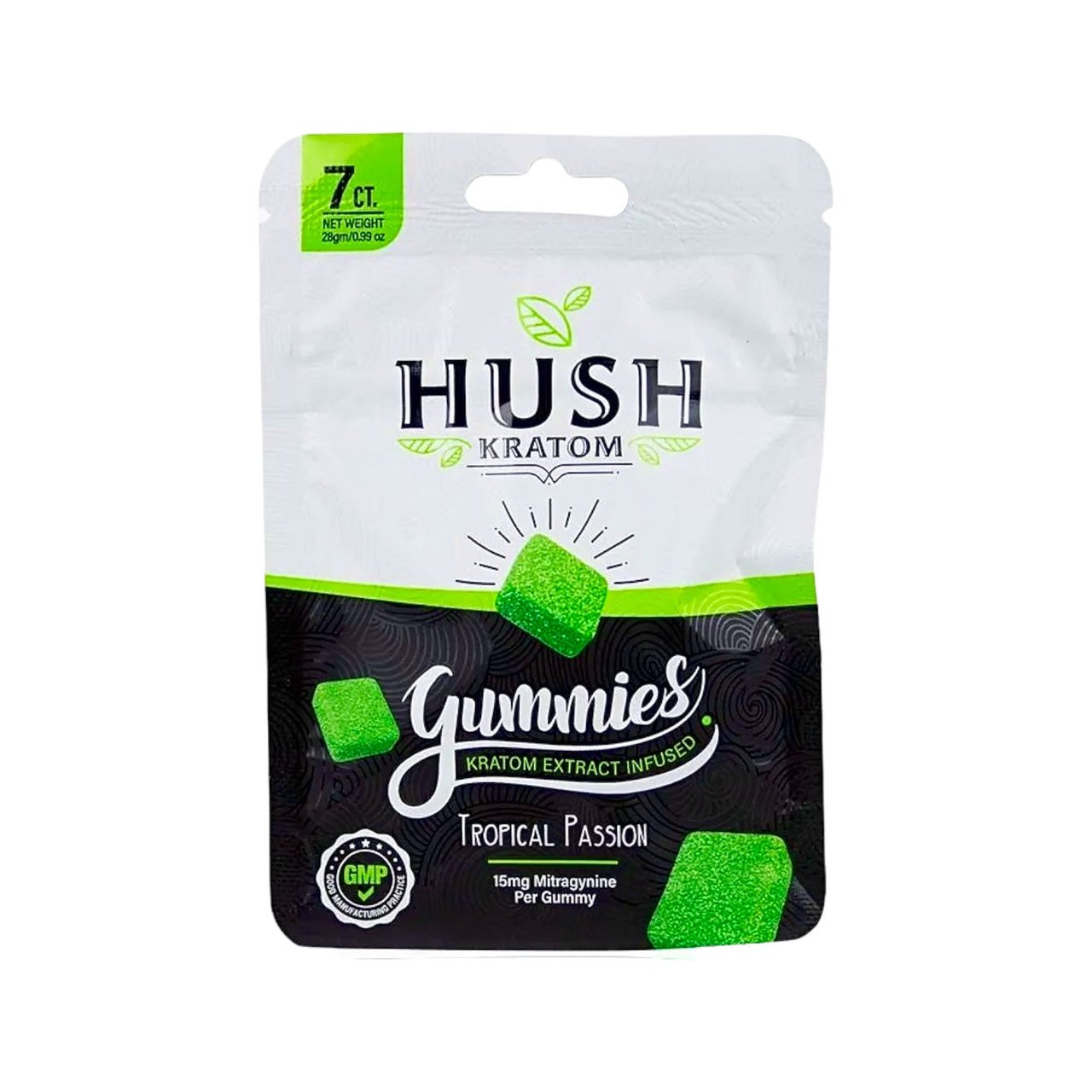
The Hush Kratom Extract Gummies come seven to a pack. Check the pack for the stated amount per gummy.
Gummies also look like candy. So they need the strictest child-safety storage of any format, as we explain below.
Our kratom gummies guide covers ingredients and labels.
Storage by Format: Comparison Table
This table sums up the main risk and the best home for each format.
Always defer to the brand’s own label.
| Format | Main storage risk | Best place | After opening | Example at Kratom Folk |
|---|---|---|---|---|
| Raw leaf powder | Humidity, air, clumping | Sealed bag in a cool, dark cupboard | Reseal fully, use a dry scoop | MIT45 Raw Leaf Powder |
| Raw leaf capsules | Humidity softening shells | Original bottle or pouch, desiccant inside | Close lid fully | OPMS Silver capsules |
| Extract capsules | Humidity, heat | Original pack, cool and dry | Close lid fully | MIT45 Black Label |
| Shots and tinctures | Heat, sunlight | Upright, capped, out of sun | Single-serve shots don’t reseal well | MIT45 Gold, Hush 10mL shots |
| Chewable tablets | Heat, humidity | Original blister or pack | Keep unused tablets sealed | K Shot Tabs |
| Gummies | Heat, melting, child access | Sealed pack, locked cupboard | Keep in original pack | Hush gummies |
| Syrup pouches | Heat | Cool, dry drawer | Single use, can’t reseal | MIT45 Go |
Why the Original Packaging Matters
The original pack does more than keep out light and air. It also carries information you may need later.
The lot number
Every product we sell has a lot or batch number. That number links your pack to a specific lab report.
If you throw the pack away, you lose that link.
So keep the pack, or at least photograph the lot number.
You can then match it in our lab results library. Our guide to reading lab reports explains each panel.
Recalls and questions
If a brand ever recalls a batch, it will identify it by lot.
Without the number, you can’t tell whether your pack is affected.
The lot number also helps when you contact us. We can look up the exact batch you received.
Labels and warnings
Original packs carry the brand’s warnings, age notice and contact details. Unlabeled containers lose all of that.
That matters in shared homes, too. A labeled pack tells everyone what it is.
Child and Pet Safety
Kratom is for adults 21 and over. Every format should sit where children and pets cannot reach it.
- Use a locked cabinet or a top shelf inside a closed cupboard.
- Never leave products on counters, nightstands or in open bags.
- Take extra care with gummies and flavored chewables, since they resemble candy.
- Don’t move products into candy tins, snack bags or unlabeled jars.
- Dispose of empty shot bottles and pouches where children can’t find them.
If a child or pet swallows any kratom product, act quickly.
In the US, call Poison Help at 1-800-222-1222, or call 911 for an emergency.
For pets, call your veterinarian or an animal poison line right away.
Traveling and Shipping
Travel adds heat and handling.
A bag in a hot trunk can reach temperatures where 7-OH breaks down quickly in lab conditions.
So pack products in a carry bag, out of direct sun. Keep them in the original labeled packs.
Laws also change by state, and some states ban kratom outright. Check kratom legality by state before you travel.
Our guide to flying with kratom covers TSA rules and state differences.
When an order arrives, bring it indoors promptly. Our shipping page explains where we ship and how.
Setting Up a Simple Storage Spot
You don’t need special equipment. A few household items cover almost every format.
- Pick one closed cupboard or drawer, away from the stove, oven, dishwasher and windows.
- Check that the spot stays dry, even on humid days.
- Add a small lockable box if children or pets live in or visit your home.
- Keep every product in its original pack inside that box.
- Leave desiccant packets where the brand put them.
- Put the newest purchase at the back, so older packs get used first.
- Photograph lot numbers once, so you can find lab reports later.
That single spot also makes it easy to see what you have.
As a result, packs are less likely to sit forgotten for months.
Humid climates
If you live somewhere muggy, moisture is your main concern.
Air conditioning helps, because it dries indoor air as well as cooling it.
Also, avoid basements and garages, which often run damp. An interior closet usually stays drier.
Hot climates
In hot regions, heat is the bigger risk.
Interior rooms on the shaded side of a home tend to stay coolest.
Then plan around deliveries. A package left on a sunny porch for hours can get far hotter than room temperature.
Buying With Freshness in Mind
Good storage starts at checkout. Buying in sensible quantities means each pack spends less time on your shelf.
- Buy amounts you expect to finish within the brand’s printed date.
- Consider smaller packs or kratom samplers when trying a new format.
- Check the lab report date for your lot, which shows roughly when the batch was tested.
- Prefer single-serve formats if you open packs only occasionally.
For example, a sampler pack keeps the first purchase small.
Then you can buy a full pack once you know the format suits you.
Common Storage Mistakes
Most storage problems come from a handful of habits. Here are the ones we hear about most.
- Leaving shots or gummies in a car’s glovebox or cupholder.
- Storing powder on an open shelf above the kitchen stove.
- Pouring powder into an unlabeled jar and throwing away the bag.
- Keeping capsules in a weekly pill organizer for weeks.
- Storing packs in a bathroom cabinet, where showers raise humidity.
- Leaving products in a bag that children can open.
Each one has an easy fix.
Usually, the fix is simply moving the product back into its original pack and a closed cupboard.
Signs a Product Has Gone Off
Storage can’t fix a product that has already spoiled. Look for these signs before using anything.
- Musty, sour or unusual smells.
- Visible mold, spots or webbing in powder.
- Hard clumps that suggest moisture got in.
- Capsules that stick together or leak.
- Liquids that look cloudy, separated or discolored compared with a fresh bottle.
- Gummies that have melted and fused.
- A printed date that has passed.
When in doubt, throw it out. Then contact the brand or us with the lot number.
Kratom Storage FAQ
Does kratom expire?
Plant compounds degrade over time, and research on kratom shelf life is still limited. Follow any date the brand prints.
Is the fridge a good place for kratom?
Usually not for powder, because condensation adds moisture. Follow the label if a brand recommends refrigeration.
Can I keep kratom in a plastic bag?
The original resealable pack works best. Thin sandwich bags let in air and lose the lot number and label.
How long does an opened shot last?
Most shots come as single-serve bottles. We can’t give a shelf life, so follow the brand’s label and date.
Does storage change the 7-OH content?
Lab work shows 7-OH breaks down quickly at 40°C or warmer in solution. Cool storage limits that risk.
Where should I store kratom at work or while traveling?
Keep it in its labeled pack, in a bag out of sun and heat.
Also check local laws before you travel.
The Bottom Line
Learning how to store kratom well comes down to cool, dry, dark and sealed.
Keep the original pack, and keep the lot number.
Above all, lock every product away from children and pets.
Browse kratom powder, shots and more in our shop. Every batch has a lab report on file.
Before using kratom, talk to a doctor. Avoid mixing it with alcohol or other substances, and never drive after use.
Sources
- Basiliere and Kerrigan (2020), Temperature and pH-dependent stability of Mitragyna alkaloids, Journal of Analytical Toxicology 44(4)
- Boise State University (2026), Shelf Life of Kratom Alkaloids, undergraduate research showcase
- Impact of chilling stress on quality and bioactive compounds in kratom leaves (2024), Agriculture and Natural Resources 58(5)
- CDC, 2018 Salmonella Infections Linked to Kratom (Final Update)
- HRSA, Poison Help line
These statements have not been evaluated by the Food and Drug Administration. Kratom products are not intended to diagnose, treat, cure or prevent any disease. Sold only to adults 21 and over where lawful. This article is general information, not medical or legal advice. See our FDA disclaimer.
