Basics
Lion’s Mane Kratom and Cordyceps Blends: What’s on the Label
Aug
Published August 29, 2026 · Updated
Lion’s Mane Kratom and Cordyceps Blends: What’s on the Label
Lion’s mane kratom blends are a newer shelf trend, and Kratom Folk stocks several mushroom and kratom products.
This guide explains what each label lists and what these fungi are. Then it compares the products on price.
We make no cognitive, energy or health claims. Instead, we stick to ingredients, formats, prices and the law.
Quick Answer: The Mushroom and Kratom Blends We Stock
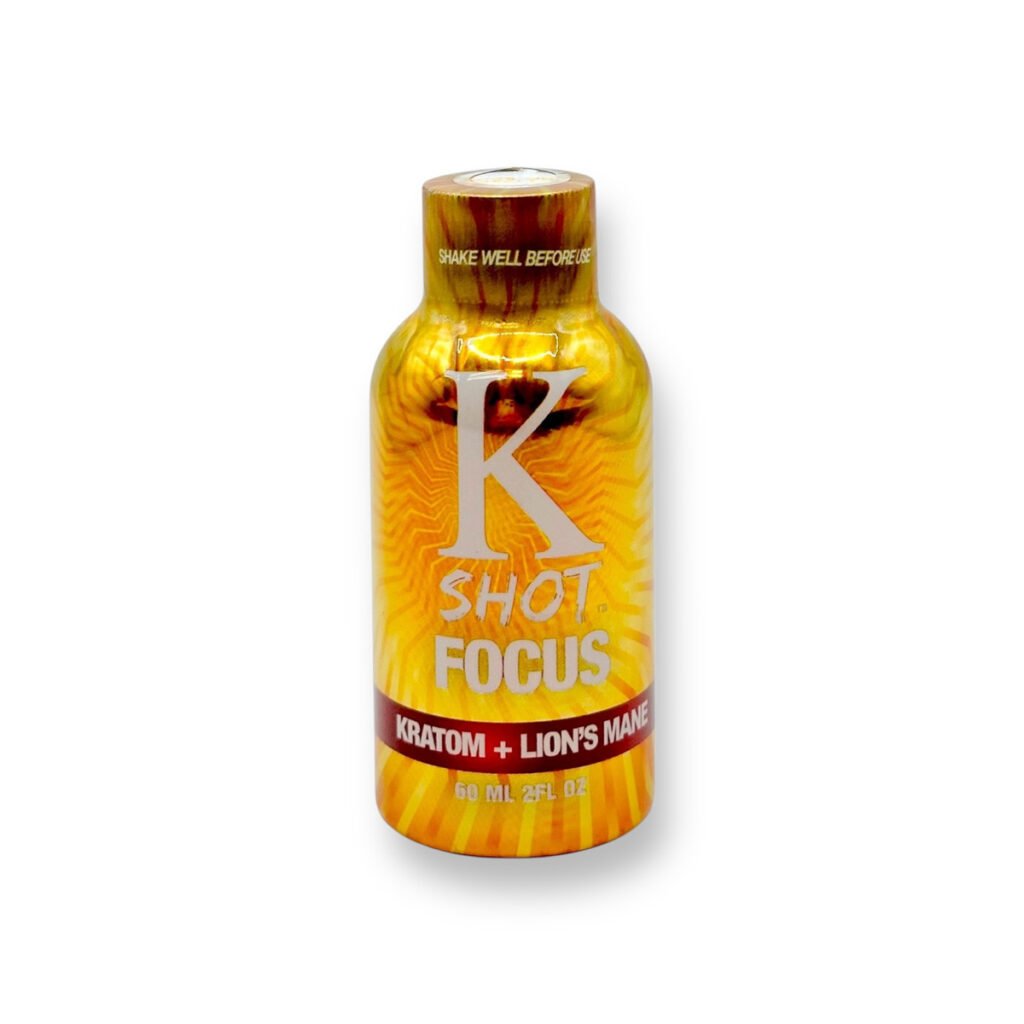
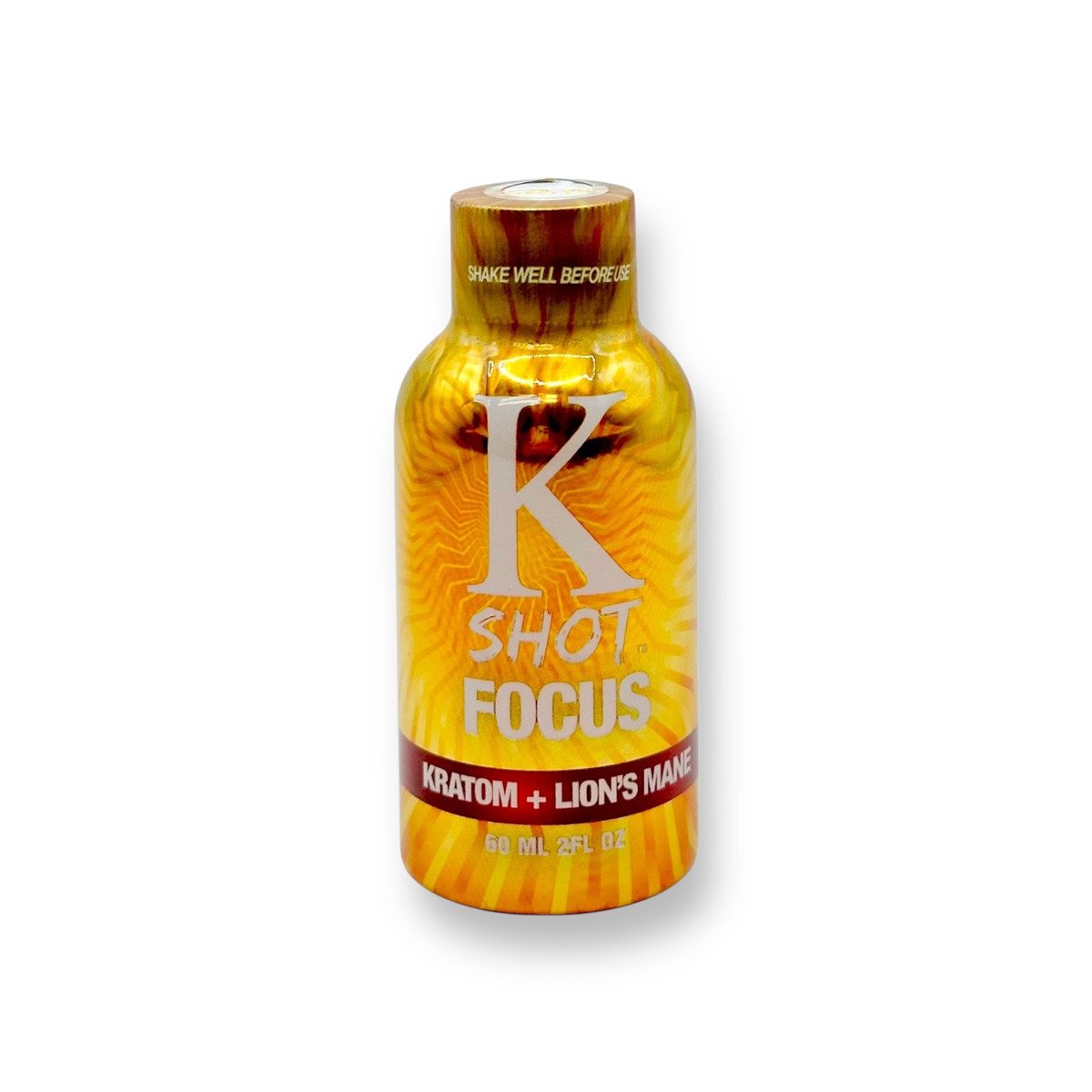
- K Shot Focus: kratom extract plus lion’s mane in a 60mL shot, $9.75.
- K Shot Bliss Extra Strength: kratom plus cordyceps in a 60mL shot, $9.79.
- K Shot K Pow Capsules: kratom plus cordyceps, five capsules for $28.79.
Only K Shot Focus lists lion’s mane in our data. The other two pair kratom with cordyceps instead.
Prices are reference retail prices from October 2026. They change, so check each product page before ordering.
What Is a Lion’s Mane Kratom Blend?
It is a product that lists both kratom extract and lion’s mane mushroom as ingredients. Most come as liquid shots.
Kratom comes from the leaves of Mitragyna speciosa, a coffee-family tree from Southeast Asia.
Lion’s mane is a fungus, not a plant. So these blends combine two entirely different kingdoms of life.
Brands often call such products “functional” blends. That word is marketing, and it has no legal or scientific definition.
Why the Product Names Don’t Tell You Much
K Shot names its blends Focus and Bliss. Those names are branding, and we don’t endorse what they suggest.
Instead, read the ingredient panel. It tells you what is actually in the bottle, which a name cannot.
Blends That Sound Similar but Differ
Several nearby products get confused with mushroom blends. Here is how they differ, based on our product data.
- K Shot Nu lists a nootropic blend. Our data does not list lion’s mane or cordyceps.
- K Tropix Kratom Enhanced Nootropic lists a nootropic formula, with no mushroom named in our data.
- K Pow with Agave mixes kratom extract with agave. It is not the cordyceps capsule.
So if you specifically want a mushroom ingredient, check the label rather than the product family name.
What Lion’s Mane Actually Is
Lion’s mane is Hericium erinaceus, an edible mushroom used in East Asian cuisine, according to Memorial Sloan Kettering.
Appearance and Habitat
It grows on dead hardwood trees. Also, its long, white, dangling spines resemble a lion’s mane, which explains the name.
Because it has spines rather than gills, mycologists group it with the tooth fungi.
Other Names You May See
MSK lists several common names. These include bearded tooth mushroom, yamabushitake, hou tou gu and monkey head mushroom.
You may also see pom pom mushroom or hedgehog fungus. Still, all refer to the same species.
How It Appears in Products
People eat lion’s mane raw, dried or cooked, and also brew it as tea, MSK notes.
As a supplement, it comes in capsules, powders and liquid extracts.
A shot like K Shot Focus uses the liquid route.
What the Research Record Shows
MSK describes clinical data on lion’s mane as limited. We make no claims about memory, mood or focus.
In one clinical study, participants reported abdominal discomfort, nausea and skin rash, according to MSK.
MSK also notes that herbal supplements can interact with some medications. Therefore, talk to a doctor first.
Not a Psilocybin Mushroom
Lion’s mane is not a “magic mushroom.” It is a common culinary species, and it contains no psilocybin.
What Cordyceps Actually Is
Cordyceps is a group of fungi famous for growing on insects. Two species dominate the supplement market.
Ophiocordyceps sinensis: The Wild Caterpillar Fungus
The classic species is Ophiocordyceps sinensis, formerly called Cordyceps sinensis. It parasitizes ghost moth caterpillars.
Those caterpillars belong to the Hepialidae family, mainly the genus Thitarodes, according to a 2026 review.
Meanwhile, the fungus itself grows in mountain regions of the Himalaya, primarily on the Tibetan Plateau.
Local names include yartsa gunbu and dong chong xia cao. In English, people simply call it caterpillar fungus.
Cordyceps militaris: The Cultivated Alternative
Wild O. sinensis commands premium prices, because its habitat is narrow and overharvesting has thinned supplies.
As a result, researchers and producers have turned to Cordyceps militaris. Growers can cultivate it artificially.
So a product labeled simply “cordyceps” could mean either species. The label should say which one.
Fruiting Body vs Mycelium
Fungus supplements can use the fruiting body, the visible mushroom part. Alternatively, they can use mycelium, the root-like network.
Some products use mycelium grown on grain. As a result, that grain can end up in the final product, too.
Our data lists only “cordyceps” for the K Shot blends. Check the printed panel for species and source material.
Not a Psilocybin Mushroom Either
Like lion’s mane, cordyceps contains no psilocybin. Neither fungus belongs with “magic mushrooms.”
The Products, Label by Label
K Shot makes all three mushroom blends we stock. Here is what each listing says.
K Shot Focus Kratom + Lion’s Mane (60mL, $9.75)
Focus pairs kratom extract with lion’s mane mushroom.
It comes in a 60mL bottle, much larger than a 10mL kratom vial.
Because of that larger bottle, it drinks more like a beverage than a concentrated shot.
At $9.75, it costs about $0.16 per mL. Our data lists no mitragynine or lion’s mane mg figure.
So read the printed label for amounts, and match the lot number to a COA.
Kratom Folk lists ingredients only. We make no claims about focus or memory, whatever the name suggests.
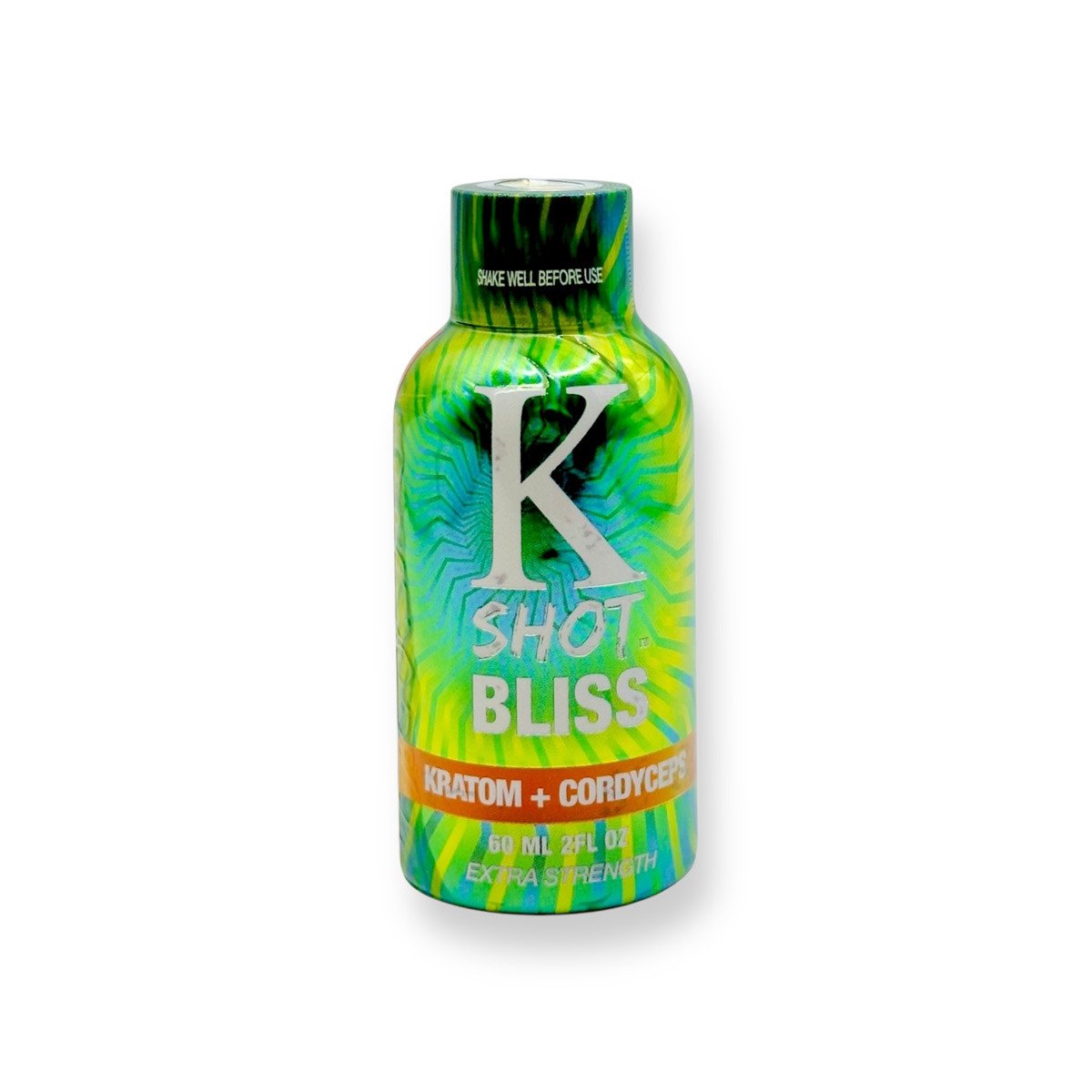
K Shot Bliss Extra Strength Kratom + Cordyceps (60mL, $9.79)
Bliss is K Shot’s extra-strength blend with cordyceps. It shares the 60mL bottle size with Focus.
The “extra strength” label refers to K Shot’s own range.
It is not an industry standard, so read the pack for exact figures.
At $9.79, it costs four cents more than Focus. That works out to about $0.16 per mL as well.
Our data does not name the cordyceps species. Check the printed panel for that detail.
K Shot K Pow Kratom + Cordyceps Capsules (5ct, $28.79)
K Pow capsules combine kratom with cordyceps in a five-count pack.
This is the only capsule format among the mushroom blends.
At $28.79 for five, each capsule costs about $5.76. Capsules also avoid the taste of a liquid.
They store well in a bag or drawer, too. Still, keep them sealed and away from children.
Our data lists no mg figure for either ingredient. As always, check the label and COA.

Lion’s Mane Kratom vs Cordyceps Kratom: Side by Side
This table collects the label facts. We include the two nootropic blends for context, since shoppers often compare them.
| Product | Format | Size | Fungus listed | Stated mg | Price | Unit price |
|---|---|---|---|---|---|---|
| K Shot Focus | Liquid shot | 60mL | Lion’s mane | Not stated in our data | $9.75 | About $0.16 per mL |
| K Shot Bliss Extra Strength | Liquid shot | 60mL | Cordyceps | Not stated in our data | $9.79 | About $0.16 per mL |
| K Shot K Pow Capsules | Capsules | 5 count | Cordyceps | Not stated in our data | $28.79 | About $5.76 per capsule |
| K Shot Nu | Liquid shot | Single bottle | None listed | Not stated in our data | $3.79 | Per bottle |
| K Tropix Kratom Enhanced Nootropic | Shot or capsules | Varies | None listed | Not stated in our data | $10.71 shot; $19.45 capsules | Per pack |
The table shows a clear pattern. None of these blends state ingredient mg figures in our data.
So per-mL and per-capsule prices compare packaging, not content. Use them as a rough guide only.
Each Fungus in Food and Tradition
Both fungi have long histories outside the supplement aisle. Knowing that history helps explain why brands use them.
Lion’s Mane at the Table
First and foremost, lion’s mane is food. MSK describes it as an edible mushroom used in East Asian cuisine.
Cooks often slice and sear it.
In Japan, people know it as yamabushitake, while Chinese sources call it hou tou gu.
Cordyceps in Tibetan Tradition
Cordyceps carries a more unusual story. The Chinese name dong chong xia cao roughly means “winter worm, summer grass.”
That name reflects folklore, since the fungus appears to turn a caterpillar into a plant over the seasons.
In reality, the fungus infects the larva underground. Then a stalk-like fruiting body grows out of it.
From Tradition to Shelf
Today, both fungi appear in coffees, teas, capsules and shots. Kratom blends are one small corner of that market.
However, tradition does not prove any effect. We mention history for context, not as a claim.
Why Brands Pair Mushrooms With Kratom
Mushroom ingredients have grown popular across many product types. So kratom brands have followed the trend.
Brands describe these blends with words like focus or bliss. Yet those words describe marketing goals, not verified results.
From a buyer’s view, adding a fungus changes three things.
It changes the ingredient list, the warnings and sometimes the price.
It does not change the law, though. Since the blend still contains kratom, kratom rules still apply.
Common Mistakes When Buying Mushroom Blends
First, shoppers sometimes assume every K Shot blend contains mushrooms.
In fact, only Focus, Bliss and K Pow capsules list them.
Second, buyers confuse K Pow with Agave and K Pow capsules. The agave pack lists no cordyceps in our data.
Third, people assume “cordyceps” names one species. Instead, it could mean O. sinensis or C. militaris.
Finally, some buyers stack a blend with another kratom product. We advise against mixing products or substances.
How to Read a Mushroom Blend Label
Mushroom blends add label questions that plain kratom shots don’t raise. Our label reading guide covers the kratom side.
- Species name: look for Hericium erinaceus or the exact cordyceps species.
- Source material: check for fruiting body, mycelium or a mix.
- Amounts: look for mg of mushroom extract and mg of mitragynine.
- 7-OH figure: useful now that federal thresholds are pending.
- Serving size as printed: the brand sets it. We give no dosing advice.
- Lot number: needed to match the bottle to a COA.
- Allergens and other ingredients: sweeteners, flavors and grain carriers.
What a COA Should Cover
For the kratom side, look for mitragynine and 7-OH. For both ingredients, look for heavy metals and microbial tests.
Fungi can take up metals from what they grow on. So a metals panel matters for fungal ingredients, too.
Every batch we carry has a COA in our lab results library. Our COA guide explains each section.
What We Want Mushroom Blend Labels to Show
Mushroom blends are popular, but their labels lag behind.
Here is what would make comparison easy.
- The exact species, such as Hericium erinaceus or Cordyceps militaris.
- Whether the brand used fruiting body, mycelium or both.
- The mg of mushroom extract per bottle or capsule.
- The mg of mitragynine and 7-OH per unit.
- A lot number that links to a public COA.
Until brands print all of these, we will keep flagging the gaps.
Meanwhile, the COA remains the most useful document you have.
Storing Mushroom Blends
Keep shots sealed, cool and out of direct sun. Similarly, keep capsules dry, since moisture can affect any powder.
Also keep each product in its original packaging. That way, the lot number stays with the product.
Our storage guide covers kratom basics that apply to these blends as well.
Legal Status of Mushroom and Kratom Blends
Lion’s mane and cordyceps are culinary and supplement fungi. They are not controlled substances.
However, these blends contain kratom. Therefore, kratom law decides where they can ship.
Federal Rules
Kratom leaf and mitragynine remain federally unscheduled as of October 6, 2026. Meanwhile, 7-OH faces pending DEA action.
The DEA’s July 6, 2026 notice proposes a threshold of over 1mg 7-OH per unit for processed products.
Separately, three kratom analogs entered temporary Schedule I on August 26, 2026. Kratom Folk doesn’t sell them.
Follow updates on our 7-OH legal status page.
State Rules
We don’t ship kratom products to Alabama, Arkansas, California, Connecticut, Indiana, Kansas or Louisiana.
We also block Massachusetts, North Dakota, Rhode Island, Tennessee, Vermont and Wisconsin.
Utah and West Virginia restrict extracts, so extract blends can’t ship there. Kentucky’s ban starts after December 31, 2026.
Laws change often, and this is not legal advice. Check our kratom legality hub first.
Safety Notes
A blend carries the warnings of each ingredient. So read the kratom and the mushroom notes together.
Kratom
- The FDA has approved no medical use for kratom, according to NCCIH.
- NCCIH lists reported risks, including nausea, dizziness, seizures, liver problems and contamination.
- Very little research in people has evaluated kratom, NCCIH notes.
Lion’s Mane and Cordyceps
- MSK reports abdominal discomfort, nausea and skin rash in a lion’s mane clinical study.
- MSK also notes that herbal supplements can interact with medications.
- Anyone with a mushroom allergy should avoid these blends.
Basics for Every Blend
- Talk to a doctor before use, especially if you take medication.
- Do not mix these blends with alcohol, caffeine products or other substances.
- Do not drive after use, and keep products away from children and pets.
- Kratom Folk sells only to adults 21 and over.
How to Choose a Mushroom Blend
We choose by format, label and price, not by effects. Here is how the three blends line up.
If You Want Lion’s Mane Specifically
K Shot Focus is the only product we stock that lists lion’s mane. It comes as a 60mL shot.
If You Want Cordyceps
Choose Bliss for a liquid shot, or K Pow for capsules. Both list cordyceps.
If You Prefer Capsules
K Pow is the only capsule option among the mushroom blends. It also costs the most per pack.
If Budget Comes First
Focus and Bliss cost almost the same, at $9.75 and $9.79.
By comparison, a single K Pow capsule costs about $5.76.
If You Don’t Want a Blend
Choose a single-ingredient kratom shot instead. Our kratom shots category lists them, and our kratom shot roundup compares them.
Lion’s Mane and Cordyceps Blend FAQ
Which product contains both kratom and lion’s mane?
K Shot Focus, a 60mL shot. It is the only one in our catalog that lists lion’s mane.
Is lion’s mane kratom legal in my state?
It contains kratom, so kratom law applies. Several states ban kratom, and Utah and West Virginia restrict extracts.
Does K Pow with Agave contain cordyceps?
Our data lists only kratom extract and agave. The cordyceps product is the separate K Pow capsule pack.
Are lion’s mane and cordyceps psychedelic mushrooms?
No. Neither contains psilocybin. Lion’s mane is a culinary mushroom, and cordyceps grows on insect larvae.
Which cordyceps species does K Shot use?
Our data doesn’t name the species. Check the printed label, or ask us and we will try to find out.
Do these blends list mg amounts?
Not in our product data. Read the printed label and the batch COA for amounts.
The Bottom Line
K Shot Focus is the only lion’s mane option we stock. Meanwhile, Bliss and K Pow pair kratom with cordyceps.
None list mg figures in our data, so the label and COA matter most. Also check your state first.
Browse all botanical blends, compare brands in our K Shot vs K Tropix guide, or visit the shop.
Sources
- Memorial Sloan Kettering Cancer Center: Lion’s Mane Mushroom
- Hua et al., Acupuncture and Herbal Medicine (2026): Ophiocordyceps sinensis review
- NCCIH: Kratom
- Federal Register: DEA notice of intent on 7-OH, 91 FR 40917 (July 6, 2026)
- Federal Register: temporary Schedule I order for three kratom analogs, 91 FR 54948 (August 26, 2026)
These statements have not been evaluated by the Food and Drug Administration. Kratom products are not intended to diagnose, treat, cure or prevent any disease. Sold only to adults 21 and over where lawful. This article is general information, not medical or legal advice. See our FDA disclaimer.
