Basics
AKA GMP Kratom: What the Certification Means for Buyers

Aug
Published August 30, 2026 · Updated
AKA GMP Kratom: What the Certification Means for Buyers
AKA GMP kratom, in plain terms, comes from a vendor that passed the American Kratom Association’s annual manufacturing audit.
That status is useful. However, it answers a narrower question than many product pages imply.
At Kratom Folk, we count GMP status as one input among several.
This guide explains what the program audits, how to verify it, and where it stops.
Quick Answer
- The American Kratom Association, or AKA, runs a Good Manufacturing Practice (GMP) Standards Program.
- Participating vendors must pass an independent third-party audit every year.
- The audit covers facilities, GMP documentation, and product labels and labeling.
- Qualified vendors appear on a public list on the AKA website.
- The list names companies, not individual products or batches.
- GMP status is not FDA approval, and it does not replace a batch lab report.
Why the AKA Created the Program
The program arrived during a rough year for kratom safety.
In early 2018, the CDC investigated a Salmonella outbreak linked to kratom.
By the time the CDC closed that investigation in May 2018, it counted 199 infections across 41 states.
Investigators could not pin the outbreak on one single source.
As a result, the whole category faced questions about handling and hygiene.
Then, in April 2019, FDA reported lead and nickel in kratom products it tested.
It said some levels exceeded safe daily exposure for oral intake.
The AKA announced its GMP program in August 2018, between those two events.
Its stated aim was to protect consumers from adulterated products.
In short, GMP auditing grew out of real contamination problems.
That history explains why process control matters so much in this category.
What a GMP System Usually Covers
The AKA does not publish its full audit checklist on its main page. However, GMP frameworks share a common structure.
FDA’s supplement GMP rule, for example, organizes requirements into subparts. Those include the following areas.
- Personnel, including training and hygiene.
- Physical plant and grounds, such as cleaning and pest control.
- Equipment and utensils, including calibration.
- Production and process controls, with written specifications.
- Laboratory operations and testing records.
- Packaging and labeling operations.
- Holding and distribution, meaning storage conditions.
- Returned products and product complaints.
- Records and recordkeeping.
So when an auditor reviews “documentation,” that is a broad net.
It can include batch records, cleaning logs and supplier checks.
We can’t confirm how the AKA weighs each area. Still, this list shows what a GMP audit typically examines.
What GMP Means in Plain English
Good Manufacturing Practice describes how a company makes, packs, labels and stores products. It focuses on process and records.
For example, GMP systems cover cleaning, equipment, staff training, ingredient checks, batch records and complaint handling.
The idea is simple. When a company controls its process, each batch should come out the way the label says.
In the US, FDA has a GMP rule for dietary supplements, 21 CFR Part 111.
However, FDA has not approved kratom for any use.
So kratom GMP programs are industry efforts. They borrow the supplement framework without any FDA endorsement.
What the AKA GMP Program Audits
The AKA announced its GMP Standards Program in August 2018.
Its stated goal was to keep adulterated products out of the supply chain.
According to the AKA, the program requires a comprehensive third-party inspection. That inspection covers three areas.
- The participant’s facilities.
- Its GMP-related documentation.
- Its product labels and labeling.
The AKA says audits look at manufacturing, packaging, labeling and holding.
The aim is reasonable assurance on identity, purity, strength and composition.
Annual audits and timing
Vendors must register and then pass an independent audit every year.
After registering, they have 90 days to complete that audit.
So a listing reflects a recent audit, not a one-time stamp.
Still, an annual audit is a snapshot, rather than continuous monitoring.
Who does the auditing
The AKA says all auditors and testing labs must be pre-approved by the AKA.
Auditor qualifications go to the AKA’s GMP team.
That rule adds some consistency. It also means the AKA, an industry group, controls who can audit.
Labeling requirements
The AKA publishes its detailed GMP requirements and labeling requirements as separate documents.
Its main program page summarizes them rather than listing every threshold.
We have not reproduced those thresholds here.
If they matter to you, read the current documents directly on the AKA site.
Separately, the AKA runs a Truth in Labeling effort.
It says it strongly opposes vendors who use illegal health claims to sell kratom.
How to Verify AKA GMP Kratom Brands
Any brand can print “GMP” on a pack. So checking takes a minute and avoids guesswork.
- Open the GMP Qualified Vendors page on the AKA website.
- Search for the company name, not the product name.
- Note that some brands list under a parent company or a slightly different spelling.
- Check that the company on the list actually makes or distributes your product.
- Then ask the brand for the batch lab report matching your lot number.
If a brand claims AKA status but does not appear, ask why.
Listings can lapse, and names can differ, so a polite email usually clears it up.
What we found when we checked
We checked the AKA’s GMP Qualified Vendors page in early October 2026. It listed four companies whose products we carry.
| Brand we carry | Name on AKA list (Oct 2026) | Example products at Kratom Folk |
|---|---|---|
| OPMS | O.P.M.S. Kratom | Silver powder and capsules, extract capsules, Red liquid shot |
| MIT45 | MIT 45 | Gold and Super K tinctures, Raw Leaf powder and capsules, Black Label capsules |
| K Tropix | K Tropix | 110mg MIT shot, Nano shot, kava shots |
| Hush | Hush Kratom | 10mL extract shots, gummies |
The list names companies only. It does not say which individual products the audit covered.
Other brands we stock did not appear by name when we checked.
That alone does not mean anything is wrong with their products.
Some brands simply don’t join the program.
In those cases, the batch lab report carries even more weight.
Listings change over time. So recheck the AKA page yourself before relying on this table.
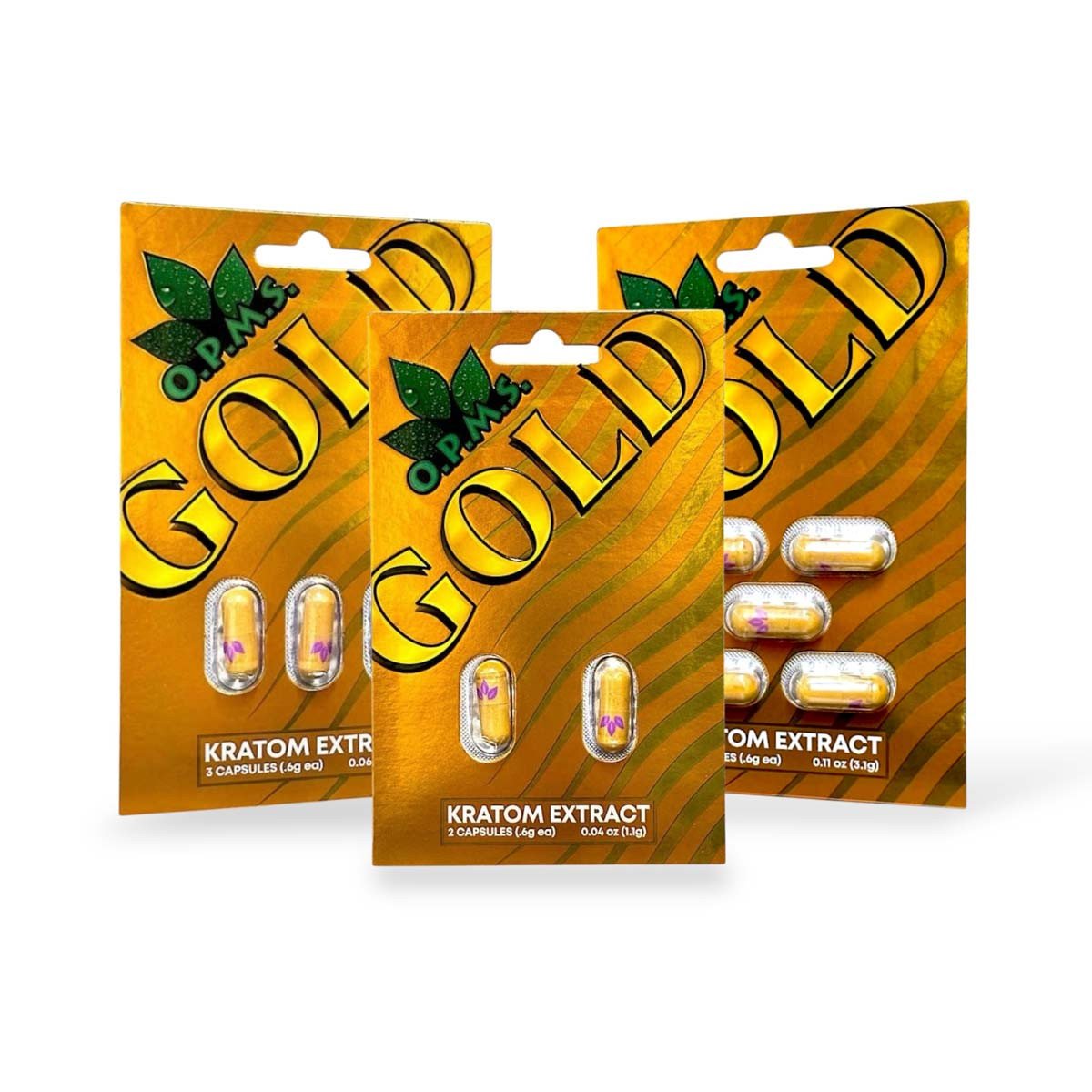
For example, OPMS extract capsules come from a company on the list.
You would still check the lot report for your pack.
What AKA GMP Kratom Status Does Not Guarantee
A GMP listing is a good sign about process. However, it has clear limits that buyers should understand.
It is not FDA approval
The AKA is a trade and advocacy group, not a government agency.
FDA has not approved kratom, and no listing changes that.
It does not test your batch
An audit checks systems and records. Meanwhile, a batch lab report checks one specific production run.
So you still need the report for the lot on your pack.
Our guide to reading kratom lab reports walks through each panel.
It does not cover every product automatically
The list names companies, not SKUs. A company may sell some products it makes and others made elsewhere.
When in doubt, ask whether the audited facility produced your specific item.
It is not continuous
Audits happen annually. Between audits, the vendor’s own systems carry the load.
So a process can slip after an audit, then get corrected at the next one.
Batch reports help fill that gap.
Also, an audit date matters.
When a listing is new, the first audit may still be in progress during the 90-day window.
It does not rank brands
The vendor list is a pass list, not a leaderboard.
Two listed companies may differ widely in testing depth and label detail.
Therefore, compare listed brands on their lab reports too.
The listing gets a brand through the door, while the reports show how far it goes.
It does not cover the shipping leg
An audit covers the vendor’s own holding conditions.
However, heat and humidity in transit or in your home also affect products.
Our guide on storing kratom covers what happens after the box arrives.
It does not settle legal questions
GMP status does not make a product legal in every state.
State bans and 7-OH caps apply regardless of any listing.
For example, several states cap 7-OH as a share of total alkaloids. Others ban kratom outright.
Federally, 7-OH remains unscheduled as of 6 Oct 2026, though the DEA has proposed a threshold.
Check our kratom legality guide before you order.
It says nothing about effects
A GMP audit looks at manufacturing. It does not, and should not, support any claim about how a product feels.
Red Flags in GMP Claims
GMP language shows up on many packs and product pages. Some uses are accurate, while others stretch the truth.
- “GMP certified” with no auditor, program or date named.
- “FDA approved facility.” FDA does not approve kratom facilities.
- An AKA logo on a brand that does not appear on the vendor list.
- A claim that the AKA approved a specific product. The list names companies.
- A GMP certificate that expired years ago.
- GMP claims paired with health claims, which the AKA itself opposes.
None of these prove a product is bad.
However, each one is a reason to ask more questions before you buy.
Questions worth asking a brand
- Which GMP program audits you, and when was your last audit?
- Does the audited facility make this exact product?
- Can you share the lab report for my lot number?
- Which lab ran the tests, and is it ISO/IEC 17025 accredited?
Good brands answer quickly. Then you can decide with real documents in hand.
GMP Audit vs Lab Report vs State Law
Buyers often blur these three safeguards together. In practice, each one answers a different question.
| Safeguard | Who runs it | What it checks | How often | What you should look for |
|---|---|---|---|---|
| AKA GMP Standards Program | AKA, with pre-approved third-party auditors | Facilities, documentation, labels and labeling | Annual audit | Company name on the AKA qualified vendor list |
| Batch lab report (COA) | Testing lab, usually paid by the brand | Alkaloids, 7-OH, metals, microbials, solvents for one batch | Every batch, ideally | Lot number matching your pack, complete panels |
| State kratom law | State legislature or agency | Age limits, labeling, adulterants, 7-OH caps or bans | Ongoing, changes often | Your state’s current status |
| Retailer vetting | The store selling the product | Report coverage, lot matching, label claims | Before listing and on restock | A published vetting policy |
The strongest products tick several boxes.
A GMP-listed company, a complete lot report and a legal-in-your-state product make a solid combination.
How Kratom Folk Vets Brands
We built our process around one idea: we read the label, and then we read the lab report.
The full checklist lives on our how we vet brands page. Here is the short version.
- Every batch we sell has a COA from an independent lab.
- We match the lot on our stock to a published report.
- We look for reports that cover alkaloids, 7-OH, metals and microbials.
- For extracts, we also look for a residual solvent panel.
- We compare label figures with the report.
- We avoid packs and listings that make health or effect claims.
- We check AKA GMP status and note it, but it never substitutes for a lab report.
We also don’t sell mitragynine pseudoindoxyl or MGM products.
The DEA placed those in temporary Schedule I on 26 Aug 2026.
You can browse every report we hold in our lab results library.
Why we don’t require GMP listing
Some solid brands never join the AKA program.
If we required it, we would drop products with complete, independent lab reports.
Instead, we look closely at the batch COAs from non-listed brands. That keeps the focus on evidence you can check.
A Worked Example: Checking One Product
Here is how the full check looks for a single product.
We use the MIT45 Gold Kratom Extract Tincture as the example.
Step 1: The company
First, search the AKA vendor page. In October 2026, it listed the company as “MIT 45,” with a space.
That spacing difference is typical. So search for partial names when a first search comes up empty.
Step 2: The label
Next, read the front label. MIT45 lists 250mg kratom extract and 125mg mitragynine per bottle.
The ingredient list is short: vegetable glycerin, water, citric acid and kratom extract. Nothing else appears, according to the brand.
Step 3: The lot report
Then find the lot number on the bottle and open the matching report.
Check for mitragynine, 7-OH, metals, microbials and residual solvents.
Because Gold is an extract, the solvent panel matters here. A leaf-only report would not fit this product.
Step 4: Your state
Finally, confirm that your state allows kratom extracts. Several states restrict or ban them, and rules change often.
If all four steps check out, you have done more homework than most buyers.
Our lab results library makes step three faster.
What about retailers?
The AKA program audits manufacturers and vendors. A retailer that only resells sealed products may not hold its own listing.
That is why we publish our vetting rules openly.
You can judge our process the same way you judge a brand’s.
Where GMP Fits With State Consumer Protection Laws
The AKA also campaigns for state Kratom Consumer Protection Acts, often shortened to KCPA. Several states have passed versions.
These laws vary widely. Some set age limits and labeling rules, while others add 7-OH caps or processor registration.
For instance, Utah’s 2026 rules allow only pure-leaf kratom, with processor registration and alkaloid labeling.
A GMP audit and a state law can overlap, but neither replaces the other.
Our KCPA state-by-state guide tracks the differences.
How to Use GMP Status When You Shop
GMP status won’t tell you which format or strength suits you.
Still, it can help you narrow a long list of brands.
By format
For raw leaf powder, focus on GMP status plus metals and microbial results.
Leaf processing is simpler, so contamination is the main question.
For kratom shots and extracts, GMP status matters more. Extraction adds steps where process control counts.
By label
Compare the front label with the lot report. Our guide to mitragynine percentages explains the math.
By price per mg
Once a product clears the paperwork, compare price per labeled mg.
For example, MIT45 Super K lists 150mg mitragynine at a $12.97 reference price.
That works out to about $0.09 per mg at time of writing. Prices change, so recheck on the product page.
AKA GMP Kratom FAQ
Is AKA GMP certification the same as FDA approval?
No. The AKA is an industry group. FDA has not approved kratom, and GMP status does not change that.
How often do vendors get audited?
Annually, according to the AKA. New registrants have 90 days to complete their first audit.
Does the AKA list individual products?
Its qualified vendor page lists company names. So confirm with the brand that your product comes from the audited operation.
If a brand isn’t listed, should I avoid it?
Not automatically. Instead, ask for a complete batch lab report and check the lab’s accreditation.
Does GMP status mean a product is legal in my state?
No. State law applies separately. Check our 7-OH legal status tracker and state guide before ordering.
Can GMP status tell me how much to use?
No. We don’t give usage advice. Read the brand’s label, and talk to a doctor before using any kratom product.
The Bottom Line
AKA GMP status shows that a company’s process passed an annual independent audit.
That is valuable, and it is worth checking.
However, it is a company-level signal. Pair it with a lot-matched lab report and a check of your state’s rules.
Start with GMP-listed brands like MIT45 and OPMS, or browse every brand in our shop.
Kratom is for adults 21 and over.
Keep products away from children, avoid mixing with alcohol, and never drive after use.
Sources
- American Kratom Association, GMP Standards Program
- American Kratom Association, GMP Qualified Vendors (checked October 2026)
- American Kratom Association, Truth in Labeling
- BioSpace, AKA Announces GMP Standards to Protect Consumers (August 2018)
- CDC, 2018 Salmonella Infections Linked to Kratom (Final Update)
- FDA, Laboratory Analysis of Kratom Products for Heavy Metals
- eCFR, 21 CFR Part 111, current good manufacturing practice for dietary supplements
- Federal Register, temporary scheduling of mitragynine pseudoindoxyl, MGM-15 and MGM-16 (91 FR 54948)
- Federal Register, DEA notice of intent on 7-hydroxymitragynine (91 FR 40917)
These statements have not been evaluated by the Food and Drug Administration. Kratom products are not intended to diagnose, treat, cure or prevent any disease. Sold only to adults 21 and over where lawful. This article is general information, not medical or legal advice. See our FDA disclaimer.
