Basics
Mitragynine vs 7-OH: The Alkaloids on Your Label
Sep
Published September 17, 2026 · Updated
Mitragynine vs 7-OH: The Alkaloids on Your Label
Mitragynine vs 7-OH is the comparison behind almost every kratom label. Learn both, and labels make sense.
At Kratom Folk, we read every label before a product goes live. These two names come up constantly.
This guide explains what each alkaloid is and how labels report them. It also covers units, legal limits and COAs.
We stick to label facts. So you will find no effect claims and no advice on amounts here.
Quick Answer
- Mitragynine: the main alkaloid in kratom leaf. Extract labels list it in mg or as a percent.
- 7-OH: 7-hydroxymitragynine, a trace leaf alkaloid. Concentrated products list it in mg per unit.
- Chemistry: 7-OH is mitragynine with one added oxygen atom.
- In leaf: a 2009 study found 1% to 6% mitragynine but only 0.01% to 0.04% 7-OH.
- Federal law: mitragynine remains unscheduled. 7-OH faces a pending DEA Schedule I order above a threshold.
- On a COA: look at both results, then at the ratio between them.
What Mitragynine Is
Mitragynine is an indole alkaloid with the formula C23H30N2O4. It is the most abundant alkaloid in Mitragyna speciosa leaf.
Researchers first isolated it in the early 20th century. Since then, it has become the reference compound for kratom testing.
That explains why extract labels name it. When a brand prints “45% mitragynine,” it means this molecule.
Leaf content varies with origin, harvest and processing. Still, the 2009 study measured 1% to 6% by weight.
Mitragynine on Labels
You will see it written several ways. Each one refers to the same compound.
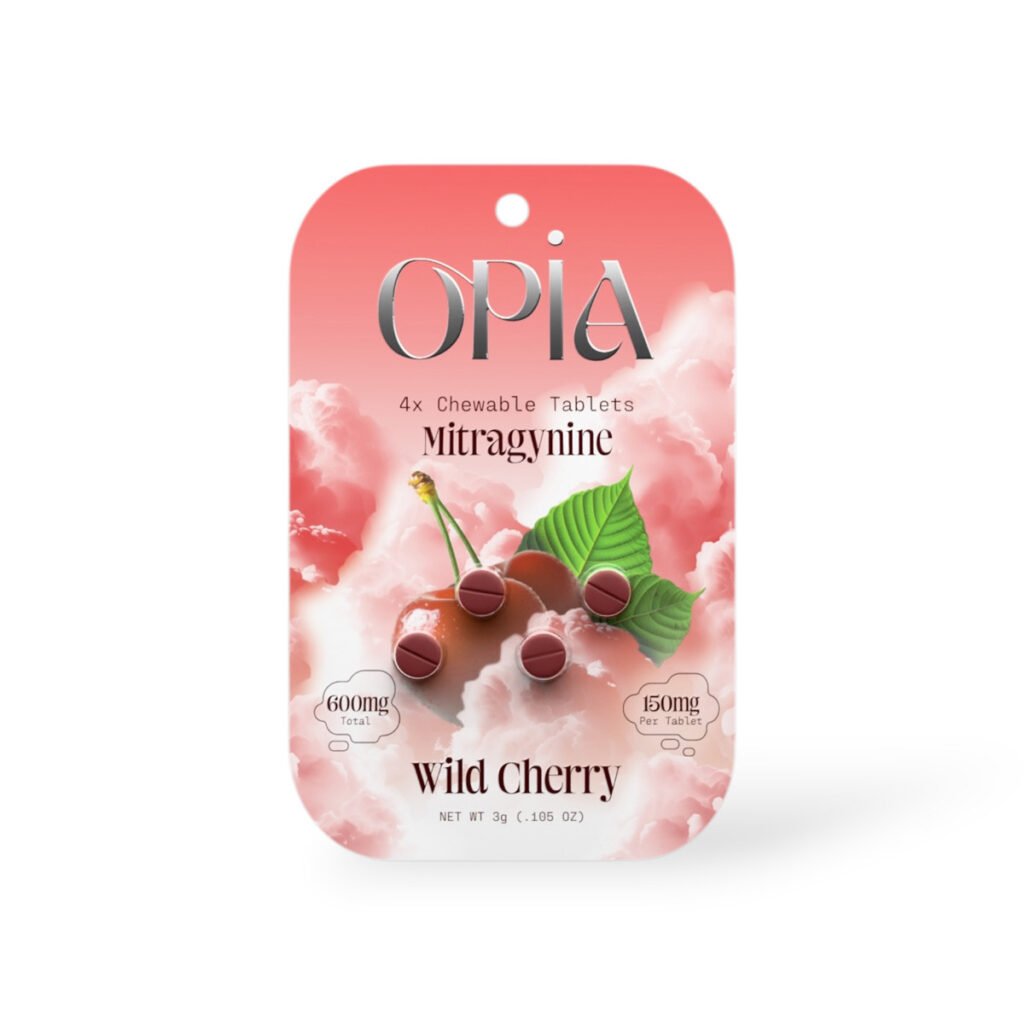
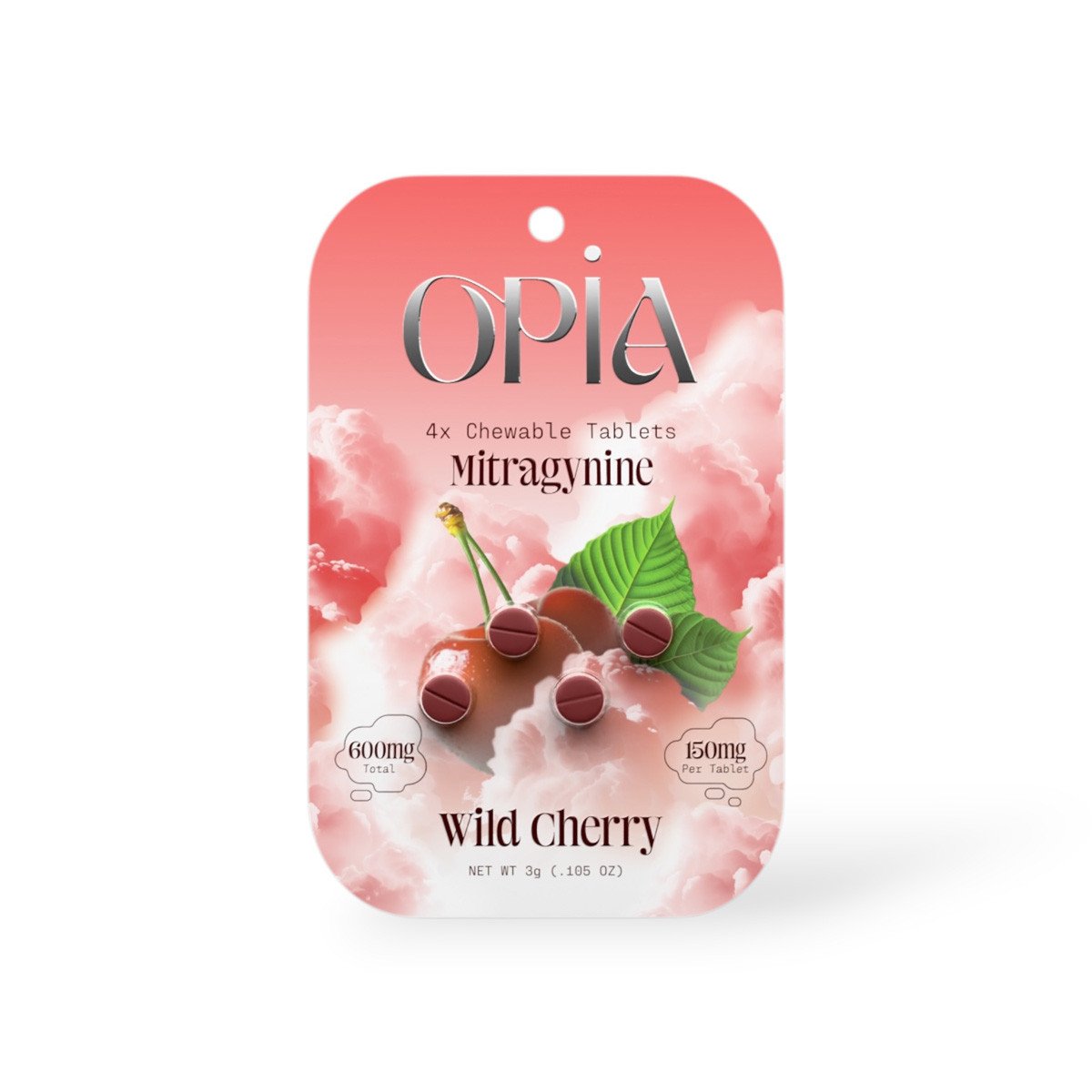
- “Mitragynine,” spelled out, as on Opia and Hydroxie Mit packs.
- “MIT,” as on the K Tropix shot that lists 110mg MIT.
- “Mitragynine blend,” as on 7 Stax tablets at 80mg or 120mg.
- A percentage beside “mitragynine,” as on MIT45 bottles.
What 7-OH Is
7-hydroxymitragynine has the formula C23H30N2O5. In other words, it adds one oxygen atom to mitragynine.
That small change produces a different molecule with a different legal status. Chemists call it an oxidized form.
The leaf contains only a trace. DEA’s 2026 notice puts it under 2% of total alkaloid content.
The body can make it too. A 2019 study found that liver enzymes convert some mitragynine into 7-OH.
Where Commercial 7-OH Comes From
Leaf alone cannot supply the amounts on 7-OH packs.
For example, a 30mg tablet would match the 7-OH in roughly 75 to 300 grams of leaf.
Instead, DEA says chemists make 7-OH from mitragynine “through a one-step chemical reaction.”
So most commercial 7-OH is semi-synthetic. It starts with plant mitragynine, then a lab converts it.
A 2025 study backs this up. It found 22 to 75 mg of 7-OH per gram in tested products.
Its authors called those levels “achievable only by synthetic means.”
7-OH on Labels
- “7-OH” or “7OH,” often in large type on the front.
- “7-Hydroxy,” as on Krave’s 30mg shot and 250mg capsules.
- “7-hydroxymitragynine,” usually in the fine print.
- Brand names that build it in, such as 7OHMZ.
Mitragynine vs 7-OH on Product Labels
Labels report the two alkaloids in different units. That difference trips up many shoppers.
Milligrams per Unit
Most tablets and shots print mg per unit. That figure shows how much of the named alkaloid one piece holds.
For example, Opia Mitragynine chewables list 150mg mitragynine per tablet, four per pack.
By contrast, Opia 7-OH chewables list 20mg 7-OH per tablet, or 80mg per pack.
Both labels say “mg,” yet they measure different molecules. Therefore, you cannot compare 150mg with 20mg directly.
Percent of Extract
Liquid extracts often add a percentage. That number shows how much of the extract is mitragynine.
- MIT45 Super K lists 500mg extract and 150mg mitragynine. That is 30%.
- Super K Extra Strong lists 1,250mg extract and 375mg mitragynine. That is also 30%.
- MIT45 Go lists 150mg extract at 65% mitragynine. That works out to about 97.5mg.
Always run the math yourself. For example, MIT45 Gold lists 250mg extract and 125mg mitragynine, branded 45%.
However, 125 divided by 250 equals 50%. The 45% figure matches the older 112.5mg bottle.
That gap is minor, yet it shows why we check. Our mitragynine percentage guide explains these labels further.
Percent Limits for 7-OH
Some extract labels cap 7-OH as a percent. Opia’s 150mg extract chewables, for example, say under 1% 7-OH.
If that percent applies to the 150mg extract, the tablet holds under 1.5 mg 7-OH.
That is a useful ceiling, but not an exact figure. So check the COA for the measured number.
Percent of Leaf Weight
Plain leaf rarely lists alkaloids on the bag. Instead, the COA reports both as a percent of dry weight.
For instance, a COA might show mitragynine at a few percent and 7-OH far below 0.1%.
To convert, remember that 1% equals 10 mg per gram. Then multiply by the bag weight.
Other Alkaloids You May See
Full COAs sometimes list more than these two. Common names include speciogynine, paynantheine and speciociliatine.
These are natural leaf alkaloids. Their presence suggests a broad, leaf-like profile.
On the other hand, some names should stop you cold. Those include MP, mitragynine pseudoindoxyl, MGM-15 and MGM-16.
DEA placed all three in Schedule I on 26 August 2026. Our pseudoindoxyl guide explains why.
Blend and Nano Labels
Some labels add words like “blend” or “nano.” For example, 7 Stax sells a Nano Tech mitragynine blend at 120mg.
The label names mitragynine, yet it does not break the blend down further.
In that case, the COA fills the gap. Look for mitragynine, 7-OH and any other alkaloids reported.
“Nano” describes the brand’s particle format. It does not change which alkaloid the product contains.
Label Examples Side by Side
This table lists real label figures from our catalog. Prices and formulas change, so check each product page.
| Product | Alkaloid named | Label figure | What it tells you |
|---|---|---|---|
| MIT45 Raw Leaf Powder | None on bag | Whole-leaf, non-extract | Natural mix; COA gives percentages |
| MIT45 Gold tincture | Mitragynine | 125mg in 250mg extract | About 50% by the label math |
| K Tropix 110mg shot | Mitragynine (MIT) | 110mg per 10mL | 11mg mitragynine per mL |
| Hydroxie Mit chewables | Mitragynine | 100mg per tablet, 10 per pack | 1,000mg mitragynine per pack |
| Opia extract chewables | Extract, 7-OH ceiling | 150mg extract, under 1% 7-OH | Under 1.5 mg 7-OH per tablet |
| Opia 7-OH chewables | 7-OH | 20mg per tablet, 4 per pack | 80mg 7-OH per pack |
| Krave 7-Hydroxy shot | 7-OH | 30mg per 10ml | 3mg 7-OH per mL |
| Press’d Max tablet | 7-OH | 250mg per tablet | Among the highest 7-OH figures we list |
Notice how the alkaloid column changes everything. Two “100mg” tablets can hold entirely different compounds.
How Leaf, Extract and 7-OH Labels Differ
Each product type has its own label pattern. Once you learn them, sorting takes seconds.
Leaf Labels
Leaf labels show net weight, vein or strain and a lot number. They seldom name either alkaloid.
Our kratom powder range follows that pattern. The COA carries the alkaloid numbers instead.
Extract Labels
Extract labels name mitragynine in mg, often with a percent. Some add a 7-OH ceiling.
Browse our kratom extracts to compare those figures across brands.
7-OH Labels
7-OH labels lead with 7-OH mg per unit, usually 15mg or more. Most come as flavored tablets or shots.
Mitragynine often goes unmentioned. That absence is itself a clue.
The Ratio Tells the Story
The most revealing number is not either figure alone. Instead, it is the ratio between them.
In Natural Leaf
The 2009 study reported 1% to 6% mitragynine and 0.01% to 0.04% 7-OH.
Even at the closest ends of those ranges, mitragynine outweighs 7-OH by at least 25 to 1.
DEA’s “under 2% of total alkaloids” points the same way. So natural leaf shows a heavy mitragynine tilt.
In Concentrated 7-OH Products
The 2025 study found something very different. Its products held 22 to 75 mg/g of 7-OH.
Meanwhile, mitragynine measured only 2.0 to 6.0 mg/g. In other words, the ratio flipped.
That flip is a fingerprint of processing.
So a COA that shows more 7-OH than mitragynine did not come from plain leaf.
Why Regulators Use Ratios
Several states write ratios into law. For example, Texas, Colorado and Arizona cap 7-OH at 2% of total alkaloids.
Oklahoma sets the cap at 1%. Similarly, Florida’s emergency rule requires 100 times more mitragynine than 7-OH.
These rules aim at the same fingerprint. Natural-looking ratios pass, while flipped ratios fail.
Mitragynine vs 7-OH Legal Thresholds
The two alkaloids sit in very different legal positions. Here is the October 2026 picture.
Federal Status
Mitragynine remains federally unscheduled. DEA’s July 2026 notice did not include it.
In contrast, DEA plans to place 7-OH in Schedule I above a threshold.
As of 5 October 2026, however, the order has not published.
For leaf, the trigger is above 0.050% 7-OH by dry weight. That equals 0.5 mg per gram.
For processed products, it is above 0.050% by weight or volume, or above 1.00 mg per article.
Our DEA 7-OH order explainer covers the full timeline.
The Extract Catch
The 1 mg test can reach mitragynine extracts too. Because extracts concentrate all alkaloids, natural 7-OH concentrates as well.
For example, an extract with 150mg mitragynine and 7-OH at 1% of that would hold 1.5 mg.
That would exceed 1.00 mg per article. So the 7-OH line on an extract COA matters legally.
State Status
States that ban kratom, such as Alabama, Wisconsin and Tennessee, usually list both alkaloids by name.
Other states target 7-OH alone. For instance, Kentucky lists 7-OH above 400 ppm.
Kentucky’s 7-OH rule does not apply to mitragynine.
Georgia and Rhode Island cap 7-OH at 0.5 mg per gram and 1 mg per serving.
See every state in our 7-OH legality guide. Laws change, so also check our 7-OH tracker.
Mitragynine vs 7-OH at a Glance
| Feature | Mitragynine | 7-hydroxymitragynine |
|---|---|---|
| Formula | C23H30N2O4 | C23H30N2O5 |
| Role in leaf | Main alkaloid | Trace alkaloid, under 2% of total per DEA |
| Leaf level, 2009 study | 1% to 6% by weight | 0.01% to 0.04% by weight |
| Commercial source | Leaf and leaf extracts | Mostly semi-synthetic, from mitragynine |
| Typical label unit | mg per unit, or % of extract | mg per unit |
| Label figures in our catalog | 80mg to 375mg per unit | 15mg to 250mg per unit |
| Federal status, Oct 2026 | Unscheduled | Unscheduled; Schedule I order pending |
| Federal trigger | None | Above 0.050%, or above 1.00 mg per article |
| Common state caps | Banned only in full-ban states | 2% of alkaloids, 0.5 mg/g, or full bans |
How to Read Both on a COA
A certificate of analysis gives measured numbers for one batch. Here is a simple routine for checking both alkaloids.
- First, match the COA lot number to your package. A mismatched lot tells you nothing.
- Next, find the units. COAs may use percent, mg/g or mg per unit.
- Then compare the mitragynine result with the label. They should roughly agree.
- After that, read the 7-OH result. Compare it with 1.00 mg per unit and your state cap.
- Next, divide 7-OH by mitragynine. A tiny fraction suggests a natural profile.
- Finally, look for MP and MGM-15 lines on any 7-OH product. Both sit in federal Schedule I.
Reading “ND” and “LOQ”
“ND” means not detected. However, it only means below the lab’s detection limit.
The LOQ, or limit of quantitation, is the smallest amount the lab can measure reliably.
So an “ND” result with a low LOQ tells you more than one with a higher LOQ.
Our kratom COA guide walks through real reports. You can also browse the lab results library.
Price per mg: Compare Within One Alkaloid
Label math also helps with value. However, only compare products that name the same alkaloid.
Here are mitragynine products from our catalog, using reference prices at the time of writing.
| Product | Mitragynine per pack or bottle | Reference price | Price per mg |
|---|---|---|---|
| Hydroxie Mit chewables, 10ct | 1,000mg | $10.65 | About 1.1 cents |
| Opia Mitragynine 150mg, 4ct | 600mg | $19.75 | About 3.3 cents |
| MIT45 Super K Extra Strong | 375mg | $24.97 | About 6.7 cents |
| MIT45 Super K | 150mg | $12.97 | About 8.6 cents |
| K Tropix 110mg MIT shot | 110mg | $10.69 | About 9.7 cents |
| MIT45 Gold | 125mg | $17.99 | About 14.4 cents |
Prices change, so recheck before you order. Also, price per mg ignores format, flavor and ingredients.
For example, a tincture and a chewable differ in more than cost. So weigh format alongside the math.
A Worked Example: One Extract Label
Let’s read a single label from start to finish. We’ll use the Opia Kratom Extract chewables.
- First, the front lists 150mg extract per tablet, four tablets per pack.
- Next, the label states under 1% 7-OH. Applied to the extract, that means under 1.5 mg per tablet.
- Then multiply by four. The pack holds under 6 mg of 7-OH in total.
- After that, compare with the law. The federal trigger would be above 1.00 mg per article.
- Finally, open the COA. The measured 7-OH figure decides which side of each line the tablet falls on.
A ceiling like “under 1%” cannot settle a 1 mg question alone. So the lab number matters most here.
How Labs Measure Both
Most kratom labs use liquid chromatography, often paired with mass spectrometry.
The instrument separates each alkaloid, then measures it against a pure reference standard.
Because every lab runs its own method, results can differ slightly between labs.
That is normal. However, large gaps between label and COA deserve a question to the brand.
Also check the test date. An old COA may not reflect a newer batch or formula.
Common Label Mistakes to Avoid
- Comparing mg across alkaloids. 100mg mitragynine and 100mg 7-OH are not equivalent figures.
- Reading extract mg as alkaloid mg. “250mg extract” is not 250mg mitragynine.
- Trusting a percent without checking. Divide the mg figures yourself, as with MIT45 Gold.
- Assuming “kratom” means leaf. Some 7-OH packs use kratom branding.
- Ignoring the lot number. A COA only covers its own batch.
How to Choose by Label
We don’t advise on effects or amounts. Instead, choose by what the label and COA tell you.
- Want a natural alkaloid profile? Choose leaf or a mitragynine extract with a low 7-OH result.
- Want exact figures? Pick products that print mitragynine mg per unit on the front.
- Want legal certainty? Avoid 7-OH products while the DEA order is pending.
- Comparing value? Compare price per mg within one alkaloid only.
Also talk to a doctor before using any kratom product. Keep it from children, and never mix it with alcohol.
Don’t drive after use either. You must be 21 or older to buy from us.
Frequently Asked Questions
Which is the main alkaloid in kratom?
Mitragynine. 7-OH occurs only in trace amounts in natural leaf.
What does “MIT” mean on a label?
It is shorthand for mitragynine. For example, the K Tropix shot lists 110mg MIT per 10mL bottle.
Is mitragynine legal federally?
Yes. It remains unscheduled, and DEA’s 2026 notice does not cover it. Some states still ban it.
Does a mitragynine product contain 7-OH?
Usually a small natural share. Check the COA for the measured 7-OH result.
Why do some labels use percent and others mg?
Extracts often show both, while 7-OH tablets show mg. Leaf COAs use percent of weight.
Can I compare 150mg mitragynine with 20mg 7-OH?
No. They are different molecules, so the numbers don’t line up. Compare like with like.
The Bottom Line
Mitragynine leads the natural leaf. 7-OH is a trace leaf alkaloid that labs concentrate from mitragynine.
Labels report them in different units, and the law handles them very differently.
So read the alkaloid name, check the units and look at the ratio on the COA.
Then shop with confidence in our shop. This page is not legal advice, and laws change.
Sources
- Kikura-Hanajiri et al., Forensic Toxicology (2009), mitragynine and 7-OH in kratom products
- Brown et al., Journal of AOAC International (2025), 7-OH in misbranded products
- Kruegel et al., ACS Central Science (2019), 7-OH as a metabolite of mitragynine
- DEA notice of intent on 7-OH, 91 FR 40917 (6 Jul 2026)
- DEA temporary order for MP, MGM-15 and MGM-16 (26 Aug 2026)
- FDA 7-OH scheduling recommendation (29 Jul 2025)
- Report on Florida’s 7-OH emergency rule
- Ohio Board of Pharmacy 7-OH rule
These statements have not been evaluated by the Food and Drug Administration. Kratom products are not intended to diagnose, treat, cure or prevent any disease. Sold only to adults 21 and over where lawful. This article is general information, not medical or legal advice. See our FDA disclaimer.
