Kava
Kava vs Kratom: Key Differences in Plant, Compounds and Law
Sep
Published September 14, 2026 · Updated
Kava vs Kratom: Key Differences in Plant, Compounds and Law
Kava vs kratom is one of the most common mix-ups on botanical shelves, so Kratom Folk wrote this plain-language guide.
The two names sound alike, and stores often shelve them together.
Yet they come from unrelated plants on opposite sides of the world.
This guide covers botany, active compounds, traditional use, regulation and legal status. It makes no claims about effects.
Kava vs Kratom at a Glance
Here is the short version. Each row gets its own section below, with sources.
| Feature | Kava | Kratom |
|---|---|---|
| Scientific name | Piper methysticum | Mitragyna speciosa |
| Plant family | Pepper family (Piperaceae) | Coffee family (Rubiaceae) |
| Native region | South Pacific islands | Thailand and neighboring Southeast Asian countries |
| Part used | Root | Leaf |
| Main compounds | Kavalactones (more than 18 identified) | Indole alkaloids, mainly mitragynine and 7-hydroxymitragynine |
| Traditional form | Ground root mixed with water | Fresh leaves chewed or dried leaves brewed |
| Key US safety notice | FDA liver advisory, March 25, 2002 | FDA has approved no medical use; 7-OH scheduling pending |
| Federal status (Oct 2026) | Not a controlled substance | Leaf and mitragynine unscheduled; 7-OH pending; three analogs Schedule I |
| State bans | None that we track | Several states ban it |
| Typical label figure | mg kavalactones | mg or % mitragynine |
Where Each Plant Comes From
The biggest difference starts with the plant itself. Kava and kratom belong to different families and grow in different regions.
Kava: A Pacific Pepper Root
Kava is Piper methysticum, a member of the pepper family. NCCIH lists it as native to the South Pacific.
Growers harvest the root. Then they dry and grind it, or extract it for supplements and drinks.
Black pepper, Piper nigrum, shares the same genus. That is a useful way to remember kava’s family.
Kratom: A Southeast Asian Coffee Relative
Kratom is Mitragyna speciosa. NCCIH describes it as a tree in the coffee family, found in Thailand and neighboring countries.
In contrast to kava, people use the leaves, not the root. Sellers dry and mill those leaves into powder.
Brands also concentrate leaf into extracts, shots and tablets. Our extract vs powder guide explains the difference.
Root vs Leaf on the Label
This difference shows up on product panels. A kava label should say root, while a kratom label should say leaf.
NCCIH lists unsuitable plant material among possible factors in kava liver cases. So the root detail matters for kava buyers.
Active Compounds: Kavalactones vs Indole Alkaloids
Both plants contain a family of related compounds. However, those families are chemically unrelated.
Kavalactones in Kava
Kava’s main compounds are kavalactones. Researchers have isolated more than 18 of them, according to a 2019 study in Molecules.
Six make up the major group: kavain, dihydrokavain, methysticin, dihydromethysticin, yangonin and desmethoxyyangonin.
Kavalactones are lactones, which NCCIH also calls pyrone constituents. They are not alkaloids.
The same study measured about 100mg of kavalactones per gram of root. A CO2 extract held about 200mg per gram.
Kava also contains flavokavains, a separate compound group. Analytical labs often test for both.
Indole Alkaloids in Kratom
Kratom’s main compounds are indole alkaloids. NCCIH names mitragynine and 7-hydroxymitragynine as the two primary ones.
According to NCCIH, both compounds interact with opioid receptors in the brain. Kavalactones do not belong to that class.
Mitragynine is the leaf’s most abundant alkaloid. Meanwhile, 7-OH occurs in much smaller amounts in natural leaf.
Our mitragynine vs 7-OH guide explains how those two compounds appear on labels.
What This Means for Label Reading
Because the compounds differ, the label numbers differ too. A kava label may list mg kavalactones.
On the other hand, a kratom label may list mg mitragynine or a percentage.
For example, MIT45 Gold lists 250mg extract and 125mg mitragynine per bottle.
You cannot compare a kavalactone figure to a mitragynine figure. They measure different compounds in different plants.
For kratom labels in detail, see our label reading guide.
Traditional Use and History
Both plants have long histories in their home regions. We describe those histories here without endorsing any traditional claim.
Kava in Pacific Island Culture
Pacific Islanders have prepared kava as a ceremonial drink for centuries, according to NCCIH.
The classic preparation mixes ground root with water. People then share it from a communal bowl at gatherings.
Today, kava bars in the US serve prepared drinks. Meanwhile, brands sell bottled kava shots and capsules.
Kratom in Southeast Asia
In Southeast Asia, people historically chewed fresh kratom leaves or brewed dried leaves into tea.
NCCIH notes historical use among workers and during religious ceremonies. It also notes that research in people remains very limited.
Modern US kratom products look very different. They include powders, capsules, liquid extracts and tablets.
Modern Products Blur the Line
Some brands now combine both plants in one bottle. As a result, shoppers sometimes assume the two are similar.
They aren’t. The combination is a product choice, not a botanical relationship.
See our kava and kratom blend comparison for every combined shot we stock.
Regulation: The FDA Kava Advisory and Kratom Actions
Both plants have drawn federal attention. However, the concerns and the actions differ.
The 2002 FDA Kava Liver Advisory
On March 25, 2002, the FDA issued a consumer advisory on kava-containing dietary supplements.
It warned that such products “may be associated with severe liver injury.”
The FDA cited reports of hepatitis, cirrhosis and liver failure from other countries.
The CDC followed in November 2002. It reported cases of liver failure needing transplants in the US and Europe.
According to the CDC report, Germany, Switzerland, Canada, Australia and France restricted kava at the time.
Later, in 2014, a German court overturned that country’s kava ban, trade press reported.
What NCCIH Says About Kava Today
NCCIH calls kava-linked liver injury rare, but notes some cases were serious or fatal.
It lists possible factors, including alcohol or acetone extracts, contamination, unsuitable plant varieties and prolonged heavy use.
It adds that water-based kava drinks have also caused liver injury.
It also warns against combining kava with alcohol or sedatives.
Federal Actions on Kratom
The FDA has not approved kratom as safe and effective for any medical purpose, according to NCCIH.
NCCIH also notes that the DEA lists kratom as a drug of concern.
Still, the plant remains outside the federal schedules.
In July 2025, the FDA recommended scheduling certain 7-OH products. It said it was not targeting natural kratom leaf.
Then, on July 6, 2026, the DEA published a notice of intent to schedule 7-OH above a threshold.
The proposed thresholds are over 0.05% 7-OH in leaf, or over 1mg per unit in processed products.
As of October 6, 2026, no final 7-OH order has appeared. Track it on our 7-OH legal status page.
Kratom Analogs Now in Schedule I
Separately, the DEA placed three kratom-related compounds in temporary Schedule I on August 26, 2026.
They are mitragynine pseudoindoxyl, MGM-15 and MGM-16. Kratom Folk does not sell products containing them.
For background, read our explainer on mitragynine pseudoindoxyl.
Regulatory Timeline: Key Dates for Both Plants
Dates help put the headlines in order. Here are the federal and state milestones covered in this guide.
- March 25, 2002: the FDA issues its kava liver advisory.
- November 2002: the CDC reports kava-linked liver failure cases in the US and Europe.
- 2014: a German court overturns Germany’s kava ban, according to trade press.
- July 29, 2025: the FDA recommends scheduling certain concentrated 7-OH products.
- July 6, 2026: the DEA publishes its notice of intent to schedule 7-OH above a threshold.
- August 26, 2026: mitragynine pseudoindoxyl, MGM-15 and MGM-16 enter temporary Schedule I.
- September 10, 2026: the HHS comment period on 7-OH closes.
- December 31, 2026: Kentucky’s last day of legal kratom sales before its ban.
Notice the pattern. Kava’s main federal action came over two decades ago, while kratom’s actions are happening now.
So kratom rules may shift again soon. We update our legality hub when we confirm changes.
Why Kava Rules Look Stable
Since 2002, kava has stayed on US shelves as a supplement and drink. However, the FDA advisory still stands.
In addition, the NIH Office of Dietary Supplements links a 2020 FDA review of kava in conventional foods.
Why Kratom Rules Keep Moving
Kratom products have changed quickly, especially concentrated 7-OH items. Regulators have responded to those newer products.
The FDA said its 2025 action targets 7-OH, not natural leaf. Still, several states ban the whole plant.
Kava vs Kratom Legal Status in the US
This is where the two plants differ most for shoppers.
Kava faces no state bans we track, while kratom faces many.
Kava’s Legal Status
Kava is not a federally controlled substance. In the US, brands usually sell it as a dietary supplement or drink.
The FDA does not approve supplements before sale. Even so, it can act when safety concerns arise, as NCCIH notes.
Kratom’s Legal Status
Kratom leaf and mitragynine remain federally unscheduled. However, states set their own rules.
Kratom Folk does not ship kratom to Alabama, Arkansas, California, Connecticut, Indiana, Kansas or Louisiana.
We also block Massachusetts, North Dakota, Rhode Island, Tennessee, Vermont and Wisconsin.
In addition, Utah and West Virginia restrict extracts. Kentucky’s kratom ban starts after December 31, 2026.
Many other states regulate kratom through a Kratom Consumer Protection Act. Our KCPA guide covers each one.
Blends Follow the Stricter Rule
A kava and kratom blend contains kratom. Therefore, kratom law decides where it can ship.
Laws change often, and this is not legal advice. Check our kratom legality hub before you order.
Product Formats on the Shelf
Both plants come in several formats. Here is how they compare in our catalog.
Kava Formats
Our kava category carries 2oz and 15ml kava shots, plus kava blends with kanna or kratom.
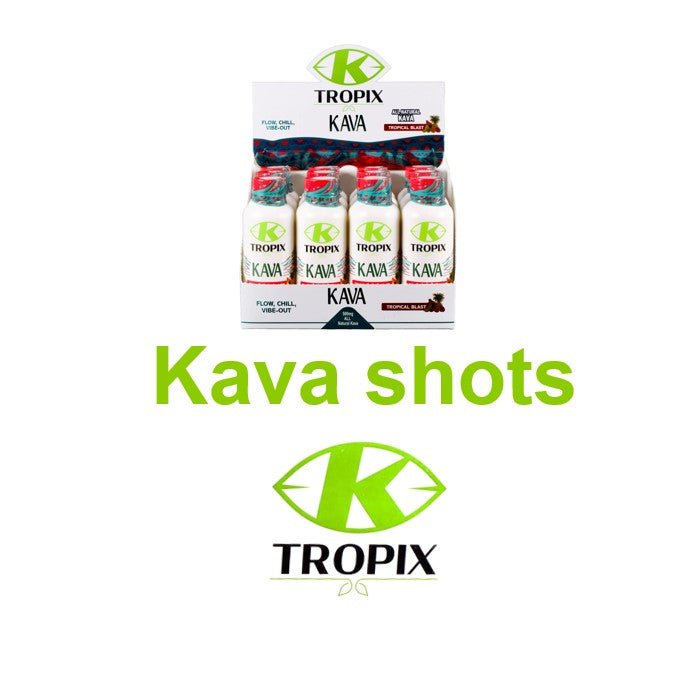
For example, K Tropix lists 500mg kavalactones on its 2oz kava shot.
Most other kava shots we stock state no figure.
Kratom Formats
Kratom comes as raw-leaf powder, capsules, liquid extracts, shots, tablets and gummies.
Extract labels usually state mitragynine in mg. Raw leaf labels often state only the vein color and weight.
Price Comparisons Don’t Cross Over
You can compare price per mg of mitragynine across kratom products.
Likewise, you can compare price per mg of kavalactones across kava products.
But a cross-plant price comparison means little. The compounds differ, so the numbers don’t line up.
Safety: What Each Plant’s Record Shows
Both plants carry safety warnings from federal health agencies. Read both sets if you buy a blend.
Kava Safety Notes
- The FDA’s 2002 advisory links kava supplements to rare severe liver injury.
- NCCIH warns against combining kava with alcohol or sedatives.
- NCCIH also flags risks during pregnancy and breastfeeding.
- Other reported side effects include digestive upset, headache, dizziness and dry, scaly skin.
Kratom Safety Notes
- The FDA has approved no medical use for kratom.
- NCCIH lists reported risks, including nausea, constipation, dizziness, seizures and liver problems.
- NCCIH also notes contamination risks, such as heavy metals and bacteria.
- Very little research in people has evaluated kratom, according to NCCIH.
Shared Safety Basics
- Talk to a doctor before using either plant, especially with medication or liver concerns.
- Do not mix either one with alcohol or other substances.
- Do not drive after use, and keep products away from children.
- Kratom Folk sells only to adults 21 and over, and gives no dosing advice.
Names, Spellings and Common Mix-Ups
Part of the confusion is linguistic. Both words are short, start with “k” and appear on the same menus.
Other Names You May See
In Hawaii, people call kava “awa.” Fijians call it “yaqona.” Both names refer to the same plant.
Kratom also goes by regional names. For example, Malaysian sources often call it “ketum.”
So a menu or label may not say kava or kratom at all. Check the scientific name when in doubt.
Kava Bars and Kratom Drinks
Some kava bars also serve kratom drinks. As a result, customers sometimes assume both drinks come from the same plant.
They don’t. Ask staff which plant each drink contains, especially if you live in or travel to a kratom-ban state.
“Kava Kratom” Is Not a Plant
You may see “kava kratom” written as one phrase on a bottle. That phrase describes a blend of two plants.
No single plant produces both kavalactones and mitragynine.
How Labs Test Each Plant
Testing also differs, because labs look for different compounds. Knowing this helps you read a COA.
Kava Testing
Labs measure kavalactones with liquid chromatography. For example, the 2019 Molecules study validated a UHPLC-UV method.
That method measured the six major kavalactones and flavokavains in root, extracts, capsules and tablets.
Kratom Testing
Kratom COAs usually report mitragynine and 7-OH content. Many also include heavy metal and microbial panels.
Since federal 7-OH thresholds may soon apply, the 7-OH line now matters more than ever.
Our kratom COA guide walks through each section with real examples.
Questions to Ask Any Brand
- Which plant part did you use, root or leaf?
- What is the kavalactone or mitragynine total per unit?
- Which extraction solvent did you use?
- Does the lot number link to a third-party COA?
- Does the COA include heavy metals and microbes?
A brand that answers all five clearly is easier to trust. Our brand vetting page explains what we check.
How to Choose What to Buy
We don’t steer anyone toward either plant. Still, a few practical questions help narrow your shopping.
Check Your State First
If your state bans kratom, kava-only products are the only option on this list we can ship.
Decide How Much Label Detail You Want
Kratom extracts often print mitragynine mg. By comparison, few kava shots print kavalactone mg.
Decide Whether You Want a Blend
Blends add a second plant, plus a second set of warnings and laws. Single-plant products keep things simpler.
Insist on a COA
Whatever you choose, match the lot number to a lab report. Our lab results library holds every batch COA.
Kava vs Kratom FAQ
Are kava and kratom related?
No. Kava belongs to the pepper family, while kratom belongs to the coffee family.
Does kava contain mitragynine?
No. Mitragynine is a kratom alkaloid. Kava’s main compounds are kavalactones.
Is kava legal where kratom is banned?
Kava is not federally controlled, and state kratom bans don’t cover kava-only products. Local rules can still differ.
Why did the FDA warn about kava?
In 2002, the FDA linked kava supplements to reports of severe liver injury, including liver failure.
Is 7-OH illegal now?
As of October 6, 2026, 7-OH remains federally unscheduled, but a DEA order is pending. Some states already ban it.
Can kava labels and kratom labels be compared?
Not directly. Kava labels list kavalactones, while kratom labels list mitragynine, so the numbers measure different things.
The Bottom Line
Kava is a Pacific pepper root with kavalactones. Kratom is a Southeast Asian coffee-family leaf with indole alkaloids.
They differ in plant, chemistry, history, warnings and law. So read each label on its own terms.
Explore our kava shelf, our kratom extracts, or the full Learn hub.
Sources
- NCCIH: Kava
- NCCIH: Kratom
- NIH Office of Dietary Supplements: Kava
- FDA consumer advisory on kava, March 25, 2002 (archived)
- CDC MMWR: Hepatic toxicity possibly associated with kava-containing products (2002)
- Tang and Fields, Molecules (2019): kavalactones and flavokavains in kava
- NutraIngredients: German court overturns kava ban (2014)
- HHS: FDA recommends scheduling action on 7-OH (July 29, 2025)
- Federal Register: DEA notice of intent on 7-OH, 91 FR 40917 (July 6, 2026)
- Federal Register: temporary Schedule I order for three kratom analogs, 91 FR 54948 (August 26, 2026)
These statements have not been evaluated by the Food and Drug Administration. Kratom products are not intended to diagnose, treat, cure or prevent any disease. Sold only to adults 21 and over where lawful. This article is general information, not medical or legal advice. See our FDA disclaimer.
