Basics
How to Read a Kratom COA, Line by Line (With a Sample)
Sep
Published September 11, 2026 · Updated
How to Read a Kratom COA, Line by Line (With a Sample)
A kratom COA, or certificate of analysis, is the lab report behind one batch.
At Kratom Folk, we read every one.
Most buyers glance at the word “PASS” and move on. However, the useful details sit in the rows above it.
This guide walks through each section, the units, and the warning signs we look for before a product goes live.
You can open our batch reports at any time in the lab results library. Keep one open while you read.
Quick Answer: The Five Things to Check First
If you only have one minute, check these five items in order. Each one takes a few seconds.
- The lot or batch number matches the number printed on your package.
- The lab name, address and accreditation number appear on the report.
- The alkaloid panel lists mitragynine and 7-OH, with units you can convert.
- Heavy metals, microbials and, for extracts, residual solvents all show results, not just “tested.”
- The test date sits close to the batch date, rather than years earlier.
When any of these is missing, the report tells you less than it seems to.
So take the gap as a question for the brand.
What a Certificate of Analysis Actually Is
A certificate of analysis is a document from a testing lab.
It reports what the lab found in a specific sample.
The key word is specific. A report covers one batch, sampled on one date, tested with named methods.
It does not certify a brand forever. It also does not cover a different flavor, size or production run.
Because of that, the batch link matters more than the logo at the top.
A clean report for the wrong lot proves nothing about your pack.
Who orders the test
Usually the manufacturer pays the lab and receives the report. Then the brand or retailer publishes it.
That arrangement is normal across food and supplement testing.
Still, it means you should check that the lab is independent of the brand.
Some retailers also order their own spot tests. We describe our approach on the how we vet brands page.
The header block
The top of the report identifies the sample. Look for these fields before you read any numbers.
- Client name, meaning the company that sent the sample.
- Sample name or product description, ideally matching the retail product.
- Lot or batch ID, which should match your package.
- Date received, date tested and date reported.
- Sample matrix, such as plant material, liquid or tablet.
Utah’s kratom rule shows how regulators think about this block.
Its COA section asks for the lot number, test dates, methods, a product photo and both addresses.
Section 1: Alkaloid Potency
The potency panel tells you how much of each alkaloid the lab measured.
For most buyers, this is the main reason to open the report.
Labs typically use liquid chromatography for this panel.
The method name, such as HPLC or LC-MS/MS, should appear next to the results.
Mitragynine and the minor alkaloids
Mitragynine is the main alkaloid in kratom leaf. Many reports also list speciogynine, speciociliatine, paynantheine and others.
Raw leaf reports usually show mitragynine as a percent of dry weight.
Extract reports may use mg per mL, mg per gram or mg per unit.
Next, compare the lab number with the front label.
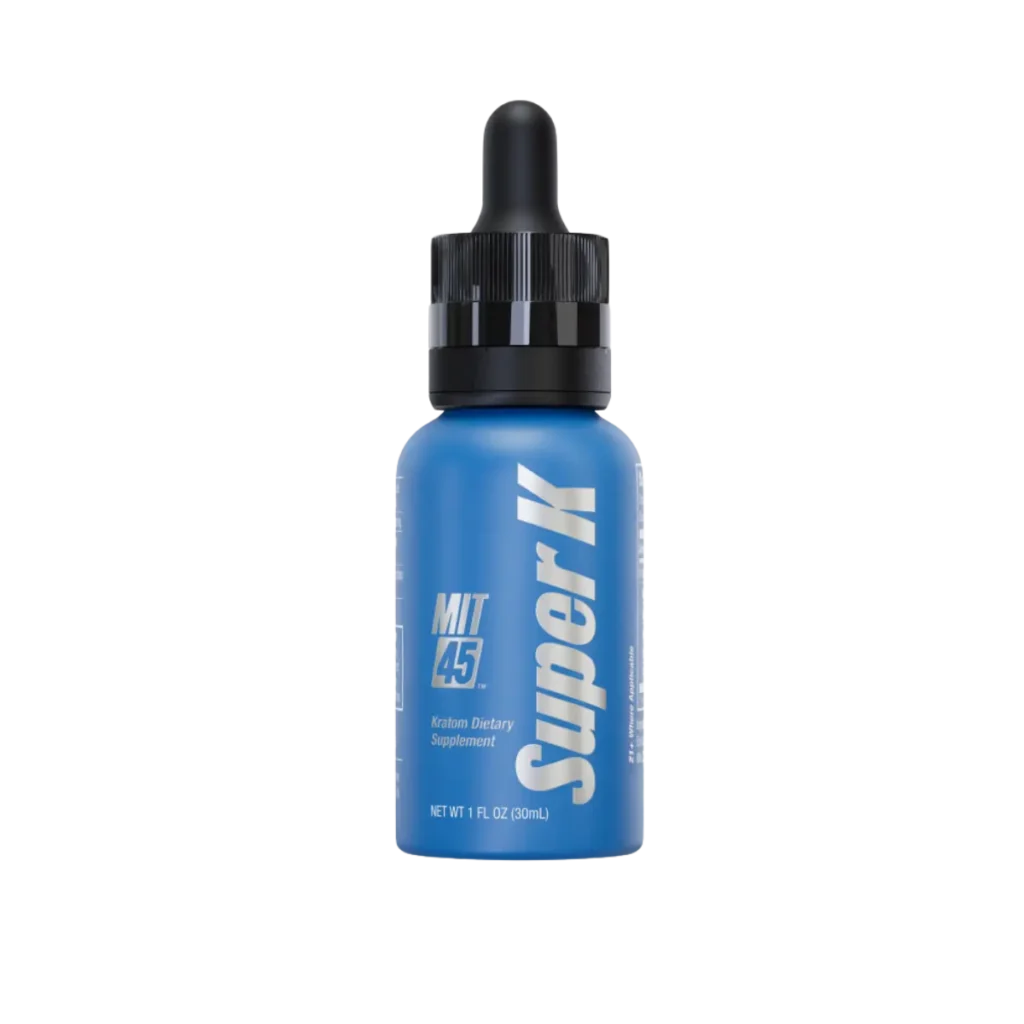
For example, MIT45 Super K lists 500mg extract and 150mg mitragynine per bottle.
That works out to 30% mitragynine by extract weight.
A matching report should let you reach a similar figure with simple math.
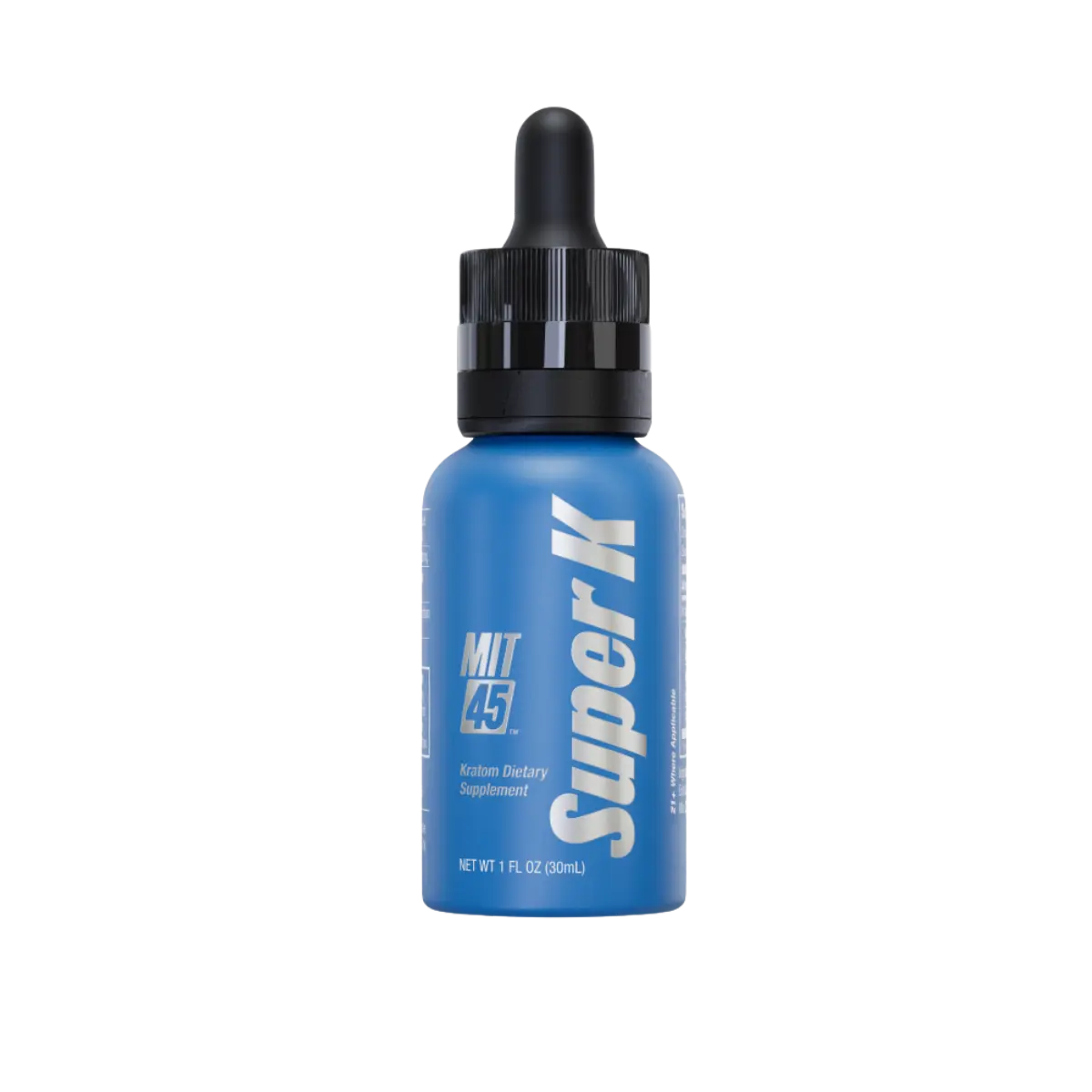
Our guide to what a mitragynine percentage means covers that math in more detail.
Reading the 7-OH line
7-hydroxymitragynine, or 7-OH, occurs in natural leaf at trace levels. Concentrated 7-OH products contain far more.
So the 7-OH row matters for both safety and legal reasons.
Several states cap 7-OH as a share of total alkaloids or per serving.
Federally, the DEA published a notice of intent on 6 Jul 2026.
It proposes a threshold of 0.050% 7-OH by dry weight for botanical kratom.
For processed products, the proposal uses 0.050% or 1.00 mg per article.
As of 6 Oct 2026, though, 7-OH remains federally unscheduled.
Laws change quickly here.
Check our 7-OH legal status tracker before you buy. This guide is general information, not legal advice.
Section 2: Heavy Metals
Kratom trees pull minerals from soil, and processing can add more. Therefore, a full report tests for heavy metals.
The standard four are lead, arsenic, cadmium and mercury. Some labs add nickel, chromium or others.
In 2019, the FDA reported testing 30 kratom products for lead and nickel.
It said some exceeded safe daily exposure levels for oral drug intake.
That finding explains why we flag any report that lacks a metals panel.
A potency number alone tells you nothing about contamination.
Typical limits, and where they come from
No single national limit applies to every kratom product.
Instead, limits come from state rules, lab defaults or the brand’s own specs.
Two state examples show the range. Both express results in parts per million, or the equivalent µg/g.
The Utah figures come from its kratom rule as amended in 2023.
Utah has since changed its kratom law, so check current rules.
| Metal | Utah kratom rule (R70-580-5) | West Virginia contaminant list |
|---|---|---|
| Lead | Less than 1.2 | 0.5 µg/g |
| Arsenic | Less than 2 | 1.5 µg/g |
| Cadmium | Less than 0.82 | 0.5 µg/g |
| Mercury | Less than 0.4 | 1 µg/g |
Notice that the two lists disagree on mercury. That is why a good report states which limit it applied.
When the limit column is blank, you cannot judge the result.
In that case, compare the number against a published state table yourself.
Section 3: Microbials
Kratom is a dried leaf, and leaves can carry bacteria, yeast and mold.
So microbial testing is the second safety panel.
In 2018, the CDC linked a Salmonella outbreak to kratom.
It counted 199 infections across 41 states before closing the investigation.
A solid microbial panel usually includes these tests:
- Total aerobic microbial count, reported in CFU per gram.
- Total yeast and mold, also in CFU per gram.
- Bile-tolerant gram-negative bacteria or coliforms.
- Salmonella, reported as detected or not detected in a stated sample weight.
- E. coli, often the pathogenic strains, reported the same way.
Utah’s rule, for example, requires absence of Salmonella and E. coli in 100 grams.
It also caps yeast and mold at 100,000 CFU per gram.
Look for “Absent” or “Not Detected” next to the pathogens.
A number with no unit, or a blank cell, deserves a follow-up email.
Section 4: Residual Solvents for Extracts
Raw leaf powder needs no solvent. Extracts are different, because makers use solvents to pull alkaloids from the leaf.
Common solvents include ethanol, water and sometimes hydrocarbons. After extraction, the maker removes most of the solvent.
A residual solvent panel checks what remains. For example, West Virginia lists an action level of 290 µg/g for hexane.
If you buy kratom extracts or shots, this panel matters. A leaf-only report attached to an extract is a mismatch.
Section 5: Pesticides and Mycotoxins
Pesticide screens look for dozens of compounds at once. Results usually appear in ppb, with most rows reading ND.
West Virginia’s list covers more than 80 pesticides. Its action levels run from 100 to 3,000 µg/kg for non-smokable products.
Mycotoxins come from molds. The most common rows are total aflatoxins and ochratoxin A, often with a 20 µg/kg limit.
Not every brand runs these panels on every batch.
Still, a brand that runs them at least periodically shows more care than one that never does.
Units Decoded: ppm, ppb, %, mg/g, LOQ and ND
Units cause more confusion than any other part of the report. Fortunately, a few conversions cover almost everything.
| Unit | Means | Equals | Where you see it |
|---|---|---|---|
| % | Percent by weight | 1% = 10 mg/g | Alkaloids in leaf |
| mg/g | Milligrams per gram | 10 mg/g = 1% | Alkaloids in leaf or extract |
| mg/mL | Milligrams per milliliter | Multiply by bottle volume for total mg | Shots and tinctures |
| ppm | Parts per million | 1 ppm = 1 µg/g = 1 mg/kg | Heavy metals, solvents |
| ppb | Parts per billion | 1,000 ppb = 1 ppm | Pesticides, mycotoxins |
| CFU/g | Colony-forming units per gram | Count of live microbes | Microbials |
| LOD | Limit of detection | Lowest level the method can see | Any panel |
| LOQ | Limit of quantitation | Lowest level the method can measure reliably | Any panel |
| ND | Not detected | Below the LOD | Any panel |
| <LOQ | Below quantitation | Present, but too low to measure precisely | Any panel |
One quick example helps.
A leaf result of 0.02% 7-OH equals 0.2 mg/g, which sits below the DEA’s proposed 0.050% botanical threshold.
Also watch the LOQ itself. ND means little if the method’s LOQ sits above the limit you care about.
A Sample Kratom COA, Annotated
Important: the table below is a made-up sample format. Every value is a placeholder we invented for teaching.
It is not any brand’s real result.
We built it to show layout and units only.
For real reports, use the lab results library and match your lot number.
| Panel | Analyte | Result (placeholder) | Limit or spec (placeholder) | LOQ | Status |
|---|---|---|---|---|---|
| Header | Lot number | SAMPLE-0000 | Must match package | n/a | Check |
| Potency | Mitragynine | 1.40% (14.0 mg/g) | Brand spec | 0.01% | Reported |
| Potency | 7-hydroxymitragynine | 0.01% (0.1 mg/g) | State or federal threshold | 0.005% | Reported |
| Potency | Speciogynine | 0.20% | None | 0.01% | Reported |
| Metals | Lead | 0.15 ppm | <1.2 ppm | 0.05 ppm | Pass |
| Metals | Arsenic | <LOQ | <2 ppm | 0.05 ppm | Pass |
| Metals | Cadmium | ND | <0.82 ppm | 0.05 ppm | Pass |
| Metals | Mercury | ND | <0.4 ppm | 0.02 ppm | Pass |
| Microbials | Salmonella | Not detected in 25 g | Absent | n/a | Pass |
| Microbials | E. coli | Not detected in 25 g | Absent | n/a | Pass |
| Microbials | Yeast and mold | 2,000 CFU/g | 100,000 CFU/g | 10 CFU/g | Pass |
| Screen | Mitragynine pseudoindoxyl | ND | Not permitted | 0.001% | Pass |
What to notice in the sample
First, every row carries a unit, a limit and an LOQ. That makes each result checkable.
Second, the pathogen rows name a sample weight.
Note that Utah’s rule asks for 100 grams, so 25 grams would not meet it.
Third, the 7-OH row shows a percentage and a mg/g figure. That lets you compare it with any threshold quickly.
Finally, the report includes a pseudoindoxyl screen. Many real reports do not, which brings us to the next section.
Leaf Reports vs Extract Reports
Raw leaf and extracts need different panels. Because of that, the same checklist does not fit every product.
| Panel | Raw leaf powder or capsules | Extracts, shots and tablets |
|---|---|---|
| Alkaloid potency | Percent of dry weight | mg per unit, mg/mL or mg/g |
| 7-OH result | Expect trace levels | Essential, since processing can raise it |
| Heavy metals | Essential | Essential |
| Microbials | Essential | Essential, though liquids may show lower counts |
| Residual solvents | Usually not needed | Essential |
| Pesticides | Useful | Useful |
| Derivative screen | Rarely run | Strongly preferred |
For example, a shot bottle holds a liquid. So its potency row should convert cleanly to a per-bottle total.
Tablets work the same way. The report should state mg per tablet, or give a per-gram figure plus tablet weight.
Meanwhile, capsules sit in between. A raw leaf capsule report often mirrors the powder report for the same lot.
When a brand uses one report for both formats, check that the lot numbers really match.
Otherwise, ask for the capsule batch report.
Our comparison of kratom extract vs powder explains why the two formats read so differently.
Lab Accreditation: ISO/IEC 17025
ISO/IEC 17025 is the international standard for the competence of testing and calibration labs. The current edition dates from 2017.
An accredited lab has passed an outside assessment of its methods, staff and quality system.
Accreditation bodies issue a certificate with a scope.
That scope matters. A lab may hold accreditation for metals but not for alkaloid potency.
So when a report shows an accreditation logo, look up the certificate.
Then check that the tests on your report fall within its scope.
Accreditation does not guarantee a perfect result. However, it raises the odds that the numbers mean what they say.
Screening for Pseudoindoxyl and MGM-15
Mitragynine pseudoindoxyl, MGM-15 and MGM-16 are semi-synthetic or derivative alkaloids. The DEA placed all three in temporary Schedule I.
That order took effect on 26 Aug 2026, with no threshold. Meanwhile, kratom leaf and mitragynine remain federally unscheduled.
Kratom Folk does not sell pseudoindoxyl or MGM products.
We also look for reports that screen for these compounds, especially on concentrated items.
A standard potency panel may not include them.
So if a report lists only mitragynine and 7-OH, it says nothing either way.
Our explainer on mitragynine pseudoindoxyl covers the chemistry and the scheduling order.
Red Flags on a Kratom COA
Most weak reports fail in predictable ways. Here are the patterns we question.
- No lot number, or a lot number that does not match the package.
- A test date years before the product’s production date.
- Potency only, with no metals or microbial results.
- “Pass” columns with no numeric results or limits beside them.
- No lab name, address or contact details.
- A lab that shares ownership or an address with the brand.
- Blurry, cropped or edited images instead of the original PDF.
- Units that change between rows with no explanation.
- An extract product with a leaf-only report attached.
How to verify a suspicious report
Start with the lab. Most labs list a phone number or email, and many offer online verification by report ID.
Next, ask the brand for the original PDF. A legitimate brand can usually send it within a day or two.
If neither step works, skip the product. There are plenty of brands that publish complete reports.
How We Use These Reports at Kratom Folk
Every product we stock has a batch report on file.
We also check that the lot printed on stock matches a published report.
Beyond that, we look at panel coverage, lab accreditation and test dates. The full checklist lives on our vetting page.
Industry programs help too. For instance, our guide to AKA GMP standards explains what that audit covers.
Still, a GMP audit and a lab report answer different questions.
The audit checks the process, while the report checks one batch.
How to Choose a Product Using Its Report
A report will not tell you which product suits you.
However, it can narrow the field to products you can trust on paper.
By format
For raw leaf, like kratom powder, focus on metals and microbials. Leaf grows in soil and dries in open air.
For extracts and shots, add residual solvents and a 7-OH figure. Processing changes the risk profile.
By label match
Pick products where the report and the front label agree within a reasonable margin.
Large gaps suggest a labeling or testing problem.
Our guide on reading a kratom label shows where each figure sits on the pack.
By price per mg
Once a product passes, price per mg becomes a fair comparison. Divide the price by the labeled mitragynine total.
For example, Super K lists 150mg mitragynine at a reference price of $12.97.
That works out to about $0.09 per mg at time of writing.
Prices change, so recheck before you buy.
Also remember that mg figures only compare fairly when they measure the same thing.
Kratom COA FAQ
Does “pass” on a report mean a product is safe?
No. It means the sample met the limits the lab applied. Always check which limits and which panels appear.
Why does my lot number not appear in the library?
Some packs list a production code rather than a lot.
Contact us with a photo, and we will help you find the matching report.
Are older reports still useful?
Only for the batch they cover.
A newer batch needs its own test, even when the product name stays the same.
Can a lab report tell me how a product will feel?
No. A report measures chemistry, not experience.
We avoid effect claims, and you should be wary of anyone who makes them.
What if a report lists no 7-OH result?
Then you cannot judge legal compliance in states with caps. Ask the brand, or choose a product that reports it.
Should I talk to a doctor before using kratom?
Yes, especially if you take medication. Also avoid mixing kratom with alcohol, and never drive after use.
The Bottom Line
A lab report is only as useful as its batch link, its panels and its lab.
Read those three things first.
Then use the numbers to compare products on facts rather than marketing.
Browse the full shop or start with our lab results.
Kratom is for adults 21 and over.
Keep every product away from children and pets, and check your state’s rules before ordering.
Sources
- Utah Admin. Code R70-580-5, Certificate of Analysis
- West Virginia Dept. of Agriculture, contaminant list for hemp and kratom
- FDA, Laboratory Analysis of Kratom Products for Heavy Metals (2019)
- CDC, 2018 Salmonella Infections Linked to Kratom (Final Update)
- ISO/IEC 17025:2017, competence of testing and calibration laboratories
- Federal Register, DEA notice of intent on 7-hydroxymitragynine (91 FR 40917)
- Federal Register, temporary scheduling of mitragynine pseudoindoxyl, MGM-15 and MGM-16 (91 FR 54948)
These statements have not been evaluated by the Food and Drug Administration. Kratom products are not intended to diagnose, treat, cure or prevent any disease. Sold only to adults 21 and over where lawful. This article is general information, not medical or legal advice. See our FDA disclaimer.
