Basics
Red vs Green vs White Kratom: What Vein Color Really Means
Aug
Published August 23, 2026 · Updated
Red vs Green vs White Kratom: What Vein Color Really Means
Red vs green vs white kratom, explained with label facts and published research instead of shop folklore.
At Kratom Folk, we sell all three colors.
Even so, we think the color name tells you less than most product pages suggest.
This guide covers what the color refers to, why nobody standardizes it, and what lab studies have actually found.
Then we compare the vein options we stock by format, origin naming and price. We skip effect claims entirely.
At a Glance
- Vein color names the color of the leaf’s central vein, at least in vendor accounts.
- Many vendors also tie the color to harvest timing and drying method.
- No regulator or industry body defines what each color must contain.
- A 2023 study found no significant alkaloid differences between commercial color strains it analyzed.
- Growing conditions, leaf age and processing appear to matter more than the color label.
- Your best comparison tool is the batch lab report, not the color.
What Vein Color Refers To
Kratom comes from the leaves of Mitragyna speciosa, a tree in the coffee family. It grows across Southeast Asia.
Each leaf has a central vein, or midrib, plus smaller veins.
On some trees that vein looks reddish, while on others it looks green or pale.
The leaf itself
Researchers in Thailand do distinguish red-veined and green-veined trees. For example, a 2025 study compared cultivated trees of both types.
So vein color can describe a real feature of a living plant. That part is not marketing.
However, a dried, milled powder has no visible veins.
Once leaf becomes powder, you cannot check the color claim by eye.
Harvest timing and drying, per vendor accounts
Many vendors say color also reflects when growers pick the leaf.
Younger and older leaves, they argue, differ in vein color.
Others describe drying differences. Some accounts mention indoor drying, sun drying or fermentation steps for certain colors.
We cannot verify these accounts across the supply chain. Also, different vendors describe the same color in different ways.
That inconsistency is the core problem.
A “red” from one source may follow a different process than a “red” from another.
Origin names and trade names
Shops usually pair a color with a region or trade name.
Examples include Red Vein Sumatra, White Vein Indo and Maeng Da.
These names describe origin or a selected grade, at least in marketing. They are not formal botanical varieties.
Our explainer on Maeng Da kratom covers that trade name in more depth.
Why Vein Color Is Not Standardized
We know of no regulator, lab standard or trade body that defines each color.
In practice, the brand decides what goes in the bag.
There is no required alkaloid range for “green.”
Likewise, no rule says “white” must come from a particular harvest.
State kratom laws focus on other things.
They typically cover age limits, labeling, adulterants and 7-OH caps, rather than leaf color.
As a result, two brands can sell very different leaf under the same color name.
Both can be truthful by their own definitions.
That is why we read the lab report first. Our guide to reading lab reports walks through each section.
What the label can tell you
A good raw-leaf label names the brand, the color, the origin and a lot number. Some also list mitragynine content.
The lot number matters most, because it links your bag to a specific lab report.
Then you can see measured alkaloids, metals and microbials.
See our guide to reading a kratom label for where each field usually sits.
What Research Says About Red vs Green vs White Kratom
Research on this exact question is limited. Still, three studies give useful clues, and they point in a consistent direction.
A survey compared with lab results
In 2023, Huisman and colleagues surveyed 644 kratom users about red, green and white strains. They also analyzed commercial products.
Respondents reported different experiences by color. Yet the product analyses found no significant cross-strain differences in alkaloid content.
The authors suggested marketing narratives might shape those reported differences. In other words, expectation may do some of the work.
That is one study, with its own limits.
Even so, it is the closest look we have at commercial color labels.
Living trees in Thailand
A 2025 study in Trends in Sciences compared cultivated red-veined and green-veined trees in Thailand.
It reported generally lower mitragynine in the red vein samples. Meanwhile, a local variety outscored both.
Note the context, though. These were sampled trees of known type, not retail powders sold under color names.
So the study shows plant genetics can matter. It does not show that a retail “red” bag contains red-veined leaf.
Environment drives much of the variation
A 2022 study by Leksungnoen and colleagues measured mitragynine in 19 naturally growing Thai trees.
Levels ranged from 7.5 to 26.6 mg per gram of dry leaf. That is more than a threefold spread.
The authors linked the variation to light, soil moisture, humidity and soil chemistry. They did not study vein color.
Taken together, these findings suggest growing conditions and processing can outweigh any color label.
Common Myths About Vein Color
A few claims come up again and again. Here is how they hold up against what we can actually check.
“Each color is a different plant species”
No. Red, green and white kratom all come from Mitragyna speciosa. The color names sit below the species level.
Some researchers do describe red-veined and green-veined tree types. Still, those remain the same species.
“Darker powder means stronger powder”
We have seen no evidence for this. Powder shade depends on drying, milling and storage, as well as the leaf.
Also, light and air can change powder color over time. So shade is a poor guide to alkaloid content.
“A color tells you the origin”
Not on its own. Red, green and white leaf can come from many regions, according to vendor listings.
That is why origin-named products, like Red Vein Sumatra, carry a little more information than a bare color.
“Mixing colors creates a new strain”
Blends combine leaf from different lots or colors.
However, a blend is still just a mix, not a new plant type.
Blends also make lab comparisons harder. When you want to compare colors, stick with single-color packs.
A Note on Effect Claims
Many shops assign each color a distinct effect profile.
We don’t repeat those descriptions, because the evidence does not support them as fact.
Also, effect claims about kratom are not something a retailer should make. FDA has not approved kratom for any use.
So we describe products by format, origin name, label figures and price. That is information you can check.
If you plan to use kratom, talk to a doctor first.
Avoid mixing it with alcohol or other substances, and never drive after use.
Red vs Green vs White Kratom Options We Stock
Our raw-leaf range comes from two long-running brands. Every batch we sell has a lab report on file.
MIT45 Raw Leaf: one brand, three colors
MIT45 built its name on liquid extracts. Its Raw Leaf line is the plain, non-extract option.
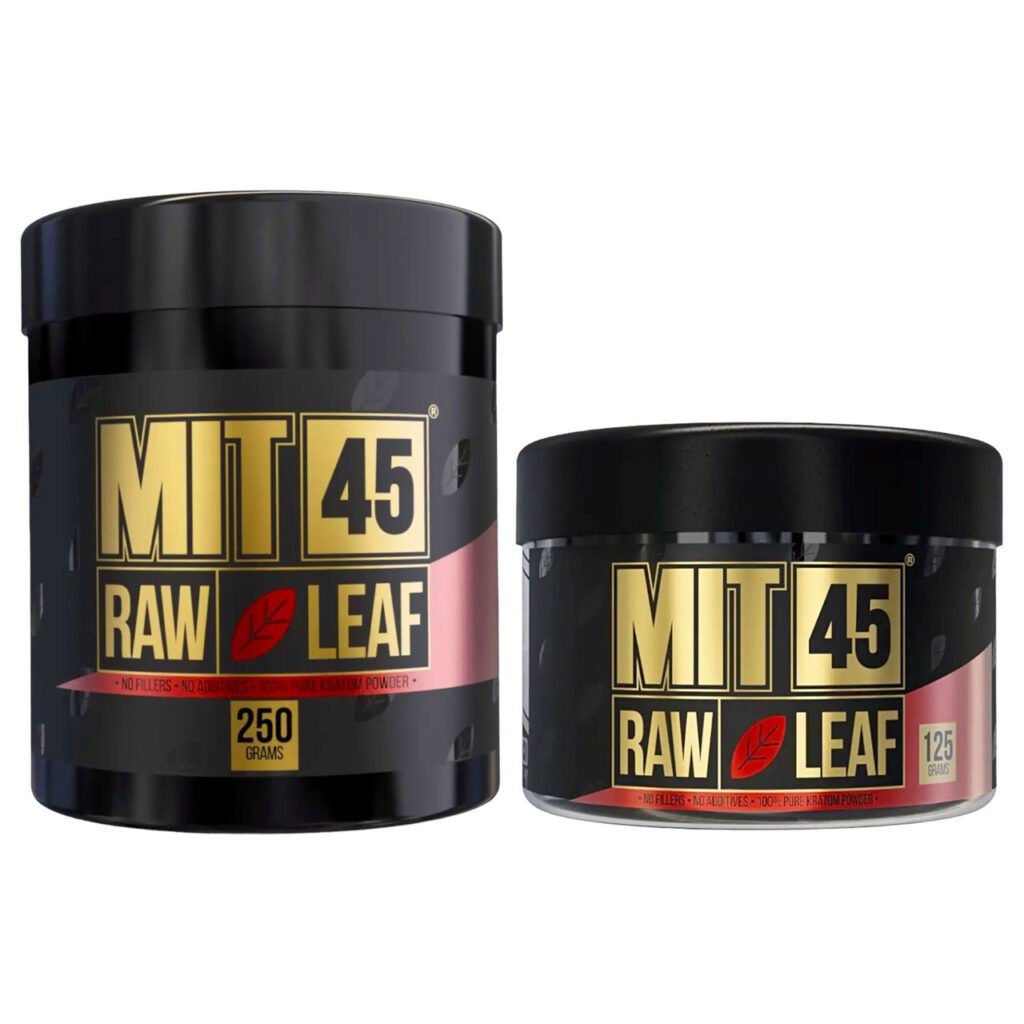
The MIT45 Raw Leaf Kratom Powder comes in red, green and white. You pick the color at checkout.
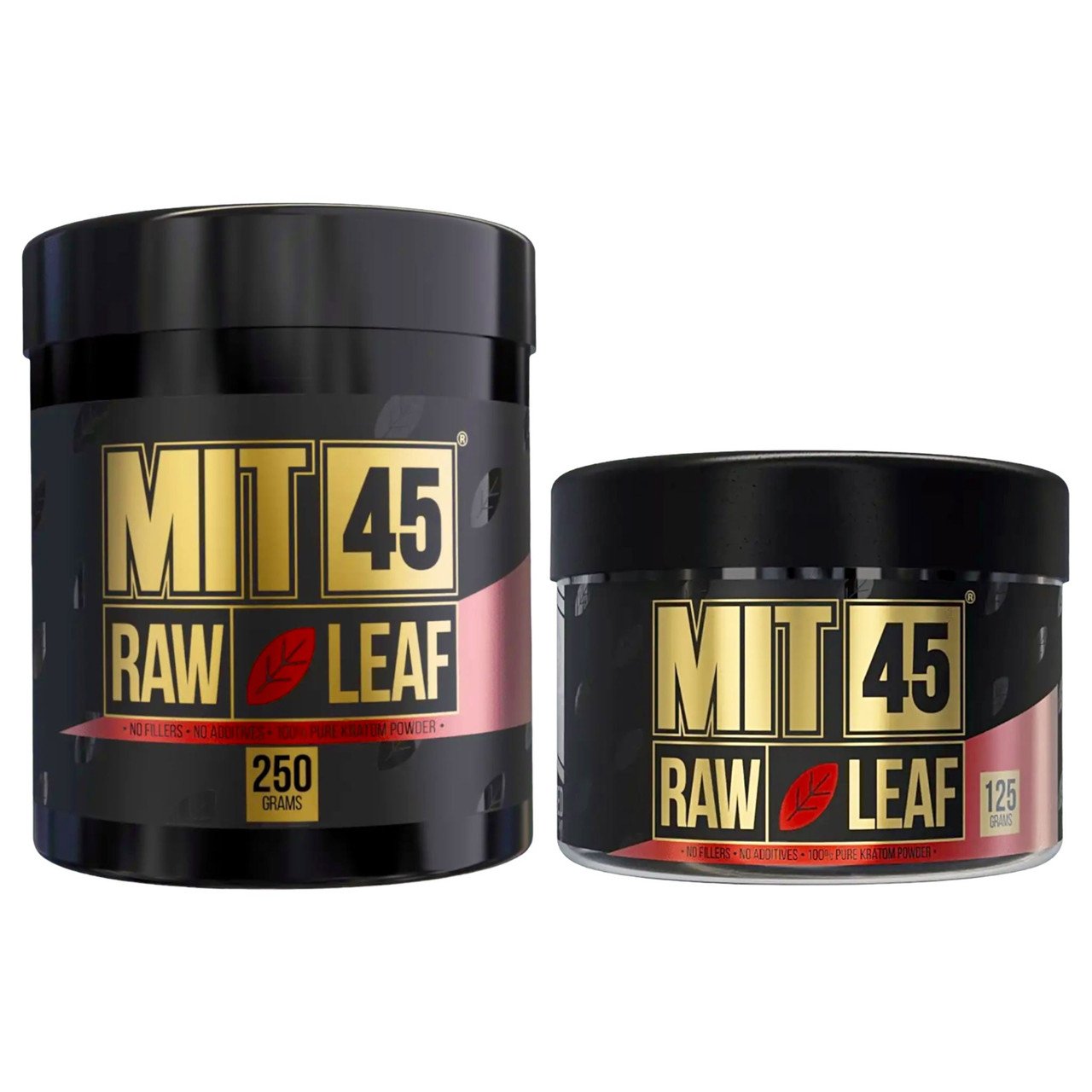
All three colors come from the same MIT45 sourcing and testing process, according to the brand.
That makes this line useful for side-by-side comparison.
The same leaf also comes in MIT45 Raw Leaf Kratom Capsules. Again, red, green and white sit on one page.
Bag size varies by color, according to the product listing. So check the pack weight before you compare prices.
OPMS Silver: origin-named single strains
OPMS sells raw leaf under its Silver range. The Silver line sits below the brand’s Gold and Black extract tiers.
The OPMS Silver Kratom Powder comes in two single-origin strains. Those are Red Vein Sumatra and White Vein Indo.
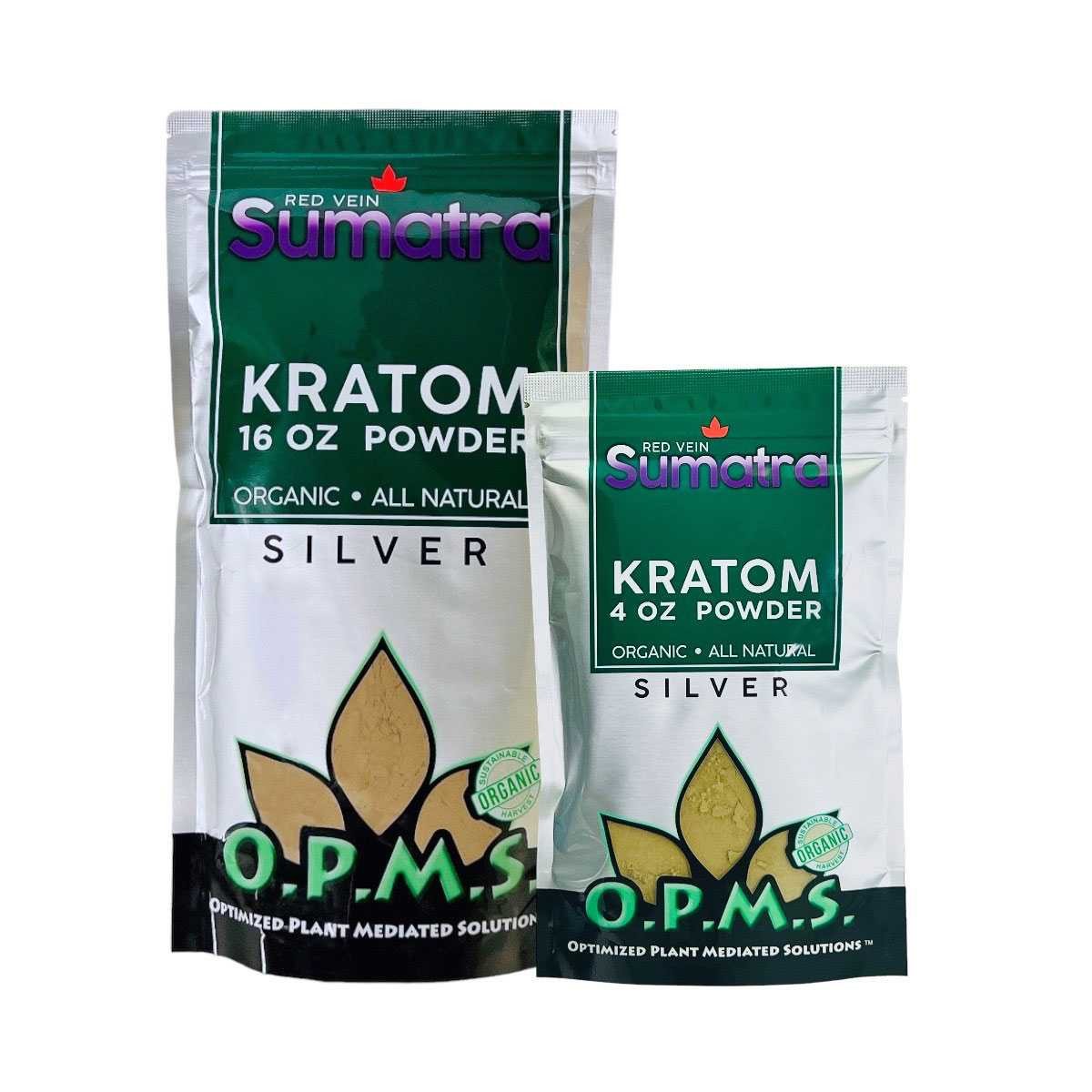
Single-strain powders let you compare origins directly. By contrast, blends make that much harder.
For capsules, the OPMS Silver Red Vein Sumatra capsules hold the same leaf and origin as the powder.
OPMS also sells a Silver Maeng Da sampler in powder or capsules.
It suits buyers who want a smaller first pack.
When “red” is not a vein color
Color words also appear on extracts. For instance, OPMS uses Red as an extract tier name, alongside Gold and Black.
Our product data does not tie that Red tier to red-vein leaf.
So read it as a product line name, not a leaf claim.
Similarly, Krave sells a White Maeng Da shot variant. Again, the label figures matter more than the color word.
Comparison Table: Vein Options by Format and Price
Prices below are reference retail prices at time of writing, in October 2026. Prices change, so check the product page.
| Product | Format | Colors or strains | Reference price | Strength on label |
|---|---|---|---|---|
| MIT45 Raw Leaf Powder | Raw-leaf powder, bag | Red, Green, White | $12.85 / $12.60 / $12.85 | Whole-leaf, non-extract |
| MIT45 Raw Leaf Capsules | Raw-leaf capsule pack | Red, Green, White | $13.85 / $12.95 / $13.85 | Whole-leaf, non-extract |
| OPMS Silver Powder | Single-strain raw-leaf powder | Red Vein Sumatra, White Vein Indo | $9.55 each | Whole-leaf, non-extract |
| OPMS Silver Capsules | Raw-leaf capsule pack | Red Vein Sumatra | $5.89 | Whole-leaf, non-extract |
| OPMS Silver Maeng Da Sampler | Sampler pack | Maeng Da (powder or capsules) | $18.82 powder / $13.24 capsules | Whole-leaf, non-extract |
Notice that none of these labels list mitragynine per gram in our data.
Therefore, the batch lab report is where you find measured alkaloids.
Also, pack sizes differ. A lower shelf price does not always mean a lower price per gram.
How to Compare Colors Using the Label
If you want to compare colors fairly, hold everything else steady. Here is the method we suggest.
- Pick one brand, so sourcing and testing stay consistent.
- Pick one format, either powder or capsules.
- Find the lot number on each pack.
- Open the matching reports in our lab results library.
- Compare the mitragynine figure and the 7-OH figure for each color.
- Then check metals and microbials, since those matter regardless of color.
MIT45 Raw Leaf works well for this method. It offers all three colors in both formats from one brand.
Because alkaloids vary batch to batch, compare the lots you actually hold.
A report from last year’s batch tells you little about today’s bag.
Why one brand beats three brands
When you compare a red from one brand with a white from another, too many variables change.
Origin, processing and testing all differ.
So any difference could come from the brand rather than the color. A single-brand comparison removes that noise.
Where 7-OH Fits In
Natural kratom leaf contains 7-hydroxymitragynine, or 7-OH, at trace levels. That holds for every color.
The 7-OH figure on a lab report matters for legal reasons.
Several states cap it, and the DEA has proposed a federal threshold.
The DEA’s July 2026 notice proposes 0.050% 7-OH by dry weight for botanical kratom.
As of 6 Oct 2026, 7-OH remains federally unscheduled.
Because vein color does not predict 7-OH content, read the report for each lot.
Our 7-OH legal status tracker follows the federal and state rules.
Laws change, and this is general information rather than legal advice. Always check your own state before ordering.
Origin Names Explained
Origin names add context that color alone cannot. Here is what the names on our raw-leaf shelf refer to.
- Sumatra: Indonesia’s large western island. OPMS names this origin on its Red Vein Sumatra packs.
- Indo: short for Indonesia. OPMS uses it on White Vein Indo.
- Maeng Da: a trade name for a selected leaf grade, rather than a place.
Even origin names rely on the brand’s sourcing records.
So the lot report remains the only thing you can verify yourself.
Still, a brand that names its origin gives you more to go on than one that names only a color.
Keeping Raw Leaf Fresh
Color can drift once you open a bag. Light, heat, air and moisture all affect dried leaf over time.
So keep raw leaf sealed in its original pack, away from sunlight and humidity.
The pack also keeps the lot number handy.
Our guide on storing kratom covers each format in detail.
Questions to Ask a Brand About Its Colors
If a color matters to you, ask the brand how it defines it.
A good brand can answer most of these questions.
- What do you mean by red, green or white for this product?
- Does the color reflect vein color, harvest timing, drying method or all three?
- Which region does this lot come from?
- Do all colors share one testing lab and one set of panels?
- Can you send the lab report for the lot printed on my pack?
- Does the report include mitragynine, 7-OH, metals and microbials?
Vague answers are common, so don’t be surprised.
However, a brand that cannot share a lot report is easy to rule out.
We ask similar questions before we list any product. Our brand vetting page explains the full process.
Price differences within one brand
Within MIT45 Raw Leaf, green carries the lowest reference price in both formats. The gap is small, though.
Green powder lists at $12.60, while red and white list at $12.85. That is a 25-cent difference.
In capsules, green lists at $12.95 versus $13.85 for red and white. So green saves 90 cents per pack.
Because bag sizes vary by color, these shelf prices may not reflect price per gram.
Check the pack weight before you decide.
How to Choose Between Colors
Since the color label carries limited meaning, choose on factors you can verify instead.
By format
Choose kratom powder if you want the lowest price and don’t mind measuring. Powder also has a bitter taste.
Choose kratom capsules if you prefer pre-filled capsules. Capsules also skip the taste.
By origin naming
Origin-named strains, like OPMS Red Vein Sumatra, give you one more data point. Generic colors give you fewer.
By price and pack size
OPMS Silver capsules carry the lowest reference price in our raw-leaf range. MIT45 offers more color choice per format.
By lab report
Finally, pick the product whose report you can open and read.
A complete report beats a nicer color story every time.
Raw leaf and extracts read very differently on a label. Our extract vs powder guide explains why.
Red vs Green vs White Kratom FAQ
Is one color stronger than the others?
Not reliably. A 2023 analysis found no significant alkaloid differences between commercial color strains. Check each batch report instead.
Can I see the vein color in powder?
No. Milling removes any visible vein. You rely on the brand’s sourcing claim and the lot’s lab report.
Why do shops describe each color so differently?
Because no standard defines the colors. Each vendor uses its own sourcing, processing and marketing language.
Is yellow or gold kratom a fourth vein color?
Those names usually describe a processing style or a product tier, according to vendors. They are not standard botanical categories.
Are vein colors legal everywhere kratom is legal?
As far as we know, no state law sets different rules by color. Check kratom legality by state before ordering.
Which color should a first-time buyer pick?
We can’t recommend a color for any effect.
Instead, compare format, price and lab reports, and talk to a doctor first.
The Bottom Line
Vein color is a real plant trait, but retail color labels follow no shared standard.
Research has not found reliable alkaloid differences by label.
So use color as a product name, then let the lab report and the price do the comparing.
Browse our full raw-leaf range in powder and capsules, or visit the shop.
Kratom is for adults 21 and over. Keep it away from children and pets, and remember that state laws change.
Sources
- Huisman et al. (2023), Examining the Psychoactive Differences between Kratom Strains, IJERPH 20(14):6425
- Chana et al. (2025), Comparative Analysis of Mitragynine and Alkaloid Content in Cultivated M. speciosa Leaves, Trends in Sciences
- Leksungnoen et al. (2022), Variations in mitragynine content in the naturally growing kratom population of Thailand, Frontiers in Plant Science
These statements have not been evaluated by the Food and Drug Administration. Kratom products are not intended to diagnose, treat, cure or prevent any disease. Sold only to adults 21 and over where lawful. This article is general information, not medical or legal advice. See our FDA disclaimer.
