Basics
7-OH vs Kratom: What’s the Difference?
Sep
Published September 26, 2026 · Updated
7-OH vs Kratom: What’s the Difference?
When people compare 7-OH vs kratom, they often assume the two are the same. They are not.
Kratom is a whole plant leaf. 7-OH is one alkaloid, and the leaf holds only a trace of it.
At Kratom Folk, we sell both, but in separate categories. This guide explains why.
We cover natural levels, how makers produce 7-OH, labels and the law. We make no effect claims.
Quick Answer
- Kratom: dried leaf of Mitragyna speciosa, a tree in the coffee family from Southeast Asia.
- 7-OH: 7-hydroxymitragynine, a minor alkaloid in the leaf and an oxidized form of mitragynine.
- Natural levels: a 2009 study found 0.01% to 0.04% 7-OH in commercial leaf products.
- 7-OH products: concentrated or semi-synthetic, listing 15mg to 250mg of 7-OH per unit in our catalog.
- Law: leaf stays federally unscheduled. However, DEA plans to schedule concentrated 7-OH.
So the difference is not subtle. It is the gap between a plant and a refined chemical.
What Kratom Is
Kratom grows as a tropical evergreen tree. Farmers in Indonesia, Thailand and nearby countries harvest its leaves.
Then they dry and mill the leaves into powder. That powder is “kratom” in its plain form.
The leaf contains dozens of alkaloids. Mitragynine leads them, while 7-OH sits far down the list.
The same 2009 study measured mitragynine at 1% to 6% of product weight. In contrast, 7-OH barely registered.
Other Leaf Alkaloids
Mitragynine is not alone. Researchers have also identified speciogynine, paynantheine and speciociliatine, among others.
These share a family resemblance with mitragynine. However, few product labels list them.
A full COA may report several of them. That gives a fingerprint of natural leaf.
By contrast, a 7-OH product’s COA often shows one dominant alkaloid. That lopsided profile is a clue in itself.
Leaf Products
Raw-leaf powder and capsules keep the plant’s natural alkaloid mix. Nobody adds or concentrates anything.
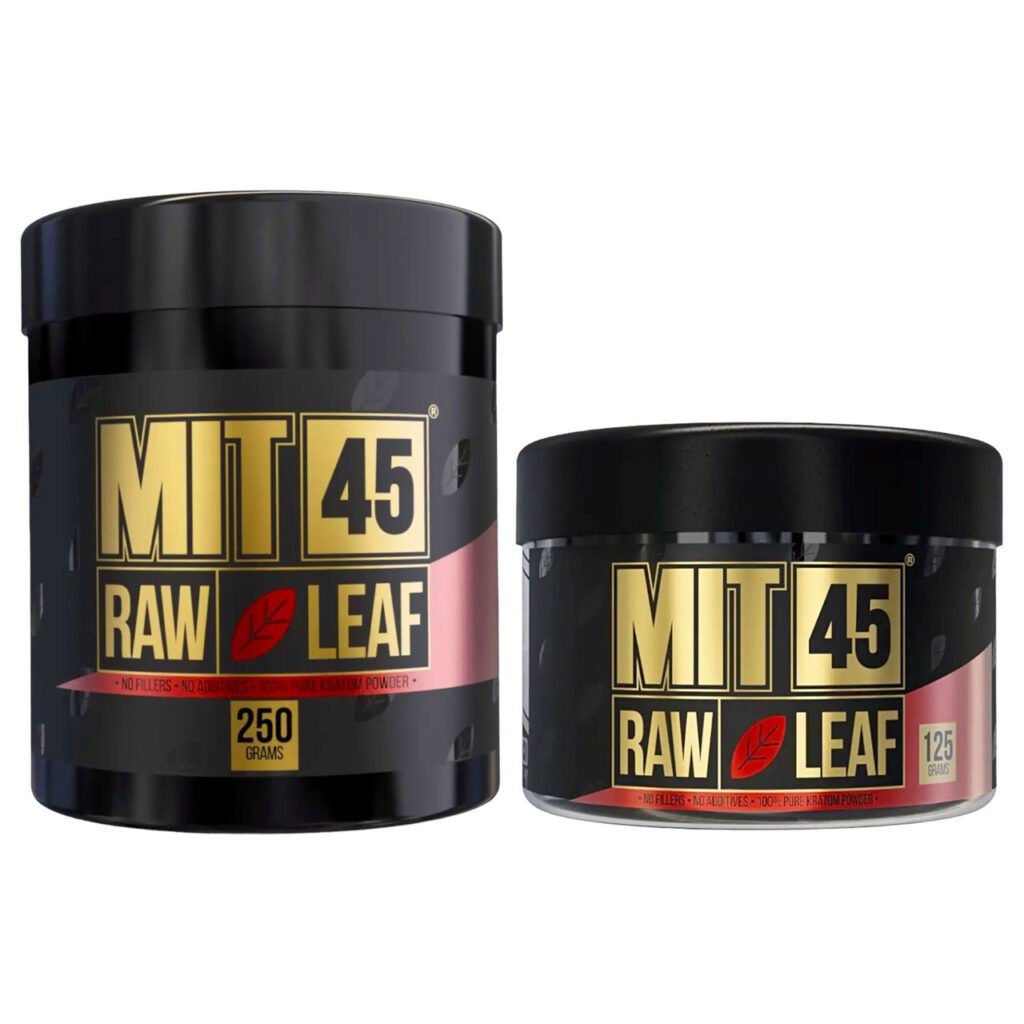
For example, the MIT45 Raw Leaf Kratom Powder label reads “whole-leaf, non-extract.”
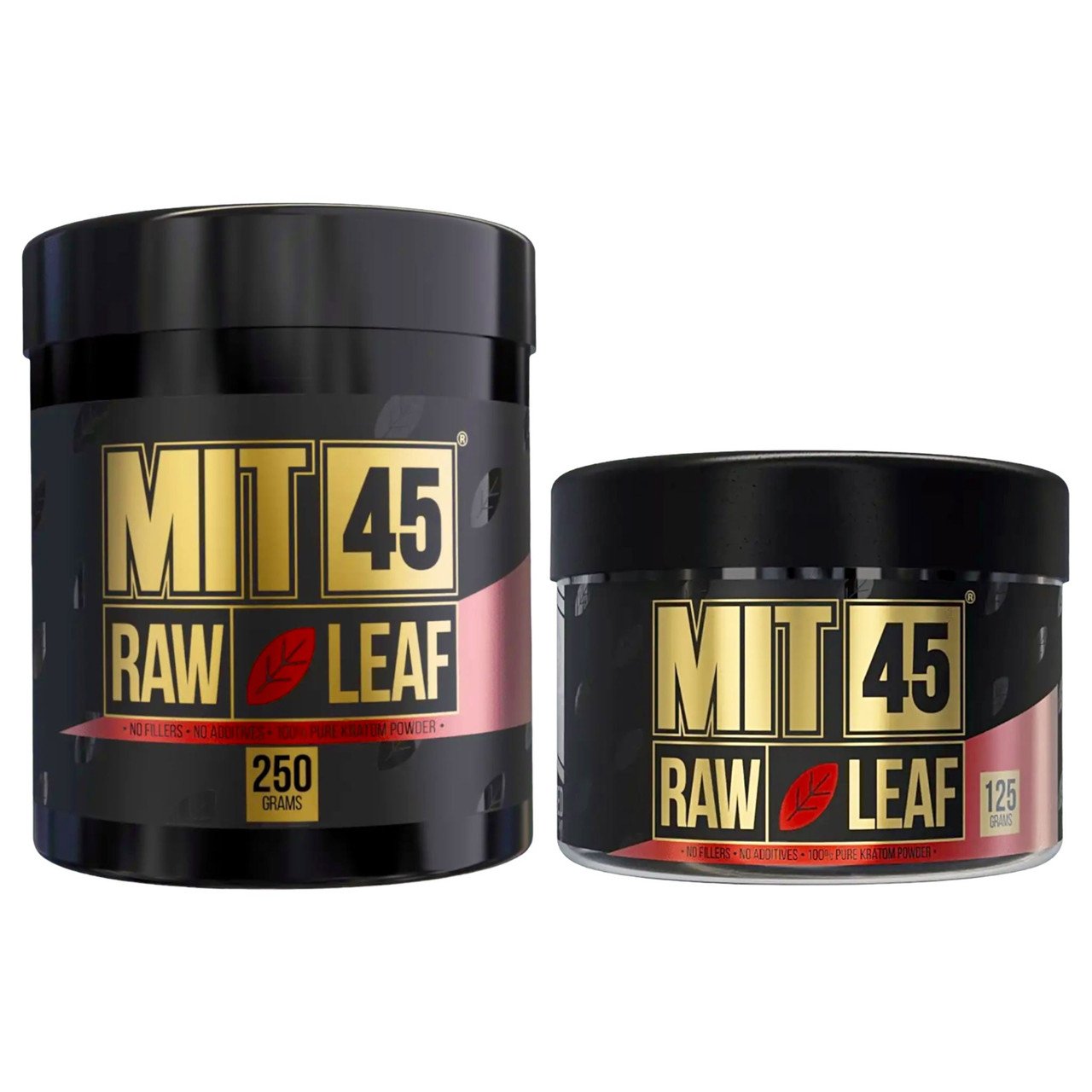
Likewise, OPMS Silver powder and capsules name a single origin, such as Red Vein Sumatra.
Leaf Extracts
Extracts sit between leaf and 7-OH. Makers pull alkaloids out of the leaf, then concentrate them.
Most extract labels name mitragynine, not 7-OH. For instance, MIT45 Gold lists 125mg mitragynine per bottle.
Some also state a 7-OH ceiling. Opia’s 150mg extract chewables, for example, say under 1% 7-OH.
Our extract vs powder guide compares those labels in detail.
What 7-OH Is
7-hydroxymitragynine is mitragynine with one extra oxygen atom. Chemists call it an oxidized form.
It occurs in the leaf naturally, but only in small amounts. DEA puts it under 2% of total alkaloids.
The body can also make it. A 2019 study found that liver enzymes convert some mitragynine into 7-OH.
How 7-OH Products Are Made
No one can extract 250mg of 7-OH from a few grams of leaf. The leaf simply doesn’t hold that much.
Instead, DEA says chemists can make 7-OH from mitragynine “through a one-step chemical reaction.”
So most 7-OH products start with mitragynine from leaf. Then a lab converts it to 7-OH.
That makes them semi-synthetic. They come from the plant, but the final molecule results from chemistry.
A 2025 study supports this. It found 22 to 75 mg of 7-OH per gram in tested products.
The authors said those levels are “achievable only by synthetic means.” Natural leaf runs roughly 50 to 750 times lower.
The Leaf Math
Label math makes the gap concrete. At 0.01% to 0.04%, a gram of leaf holds 0.1 to 0.4 mg.
- A 20mg Opia 7-OH chewable equals the 7-OH in roughly 50 to 200 grams of leaf.
- A 150mg AlkLabs tablet equals the 7-OH in roughly 375 grams to 1.5 kilograms of leaf.
- A 250mg Press’d Max tablet equals the 7-OH in roughly 625 grams to 2.5 kilograms of leaf.
These numbers describe content, not use. Still, they show why regulators split the two so sharply.
Where the Confusion Comes From
If the two differ so much, why do shoppers mix them up? Several reasons stand out.
- Shared shelf space: gas stations and smoke shops often stock 7-OH tablets next to kratom shots.
- Shared names: many 7-OH products use “kratom” on the pack, or a kratom-sounding brand.
- Vague labels: FDA said in 2025 that some 7-OH products are “disguised or marketed as kratom.”
- Shared brands: some companies sell leaf extracts and 7-OH under one logo.
The 2025 AOAC study even used the phrase “misbranded as kratom” in its title.
So the burden falls on the label reader. Fortunately, a few checks sort products quickly, as shown below.
How the Market Shifted
For generations, people in Southeast Asia used kratom as fresh or dried leaf.
Later, US sellers added powders, capsules and then liquid extracts built around mitragynine.
Concentrated 7-OH tablets arrived much more recently. By mid-2025, FDA was sending warning letters to 7-OH marketers.
Then, on 29 July 2025, FDA recommended scheduling them. That move set up the 2026 DEA notice.
7-OH vs Kratom on the Label
Labels tell you which one you hold, if you know where to look. Here is what each type prints.
What a Leaf Label Shows
- Net weight in grams, or capsule count.
- Vein color or strain name, such as red, green or Maeng Da.
- Words like “raw leaf,” “whole leaf” or “non-extract.”
- A batch or lot number for COA lookup.
A leaf label rarely lists mg of any alkaloid. Instead, the COA reports mitragynine and 7-OH as percentages.
What an Extract Label Shows
- Total extract in mg, such as 250mg.
- Mitragynine in mg, often with a percentage, such as 45%.
- Sometimes a 7-OH limit, such as “under 1%.”
Extracts still center on mitragynine. So the 7-OH figure stays small, or the label omits it.
What a 7-OH Label Shows
- “7-OH,” “7-hydroxy” or “7-hydroxymitragynine” on the front.
- A 7-OH figure in mg per tablet or per bottle, usually 15mg or more.
- Brand names that build in the term, such as 7OHMZ or Hydroxie.
- Usually a candy-style flavor and a tablet or shot format.
One Brand, Two Molecules
Some brands sell both types. That makes careful reading essential.
For example, Hydroxie sells a mitragynine chewable, Hydroxie Mit, at 100mg per tablet.
It also sells 7-OH chewables at 15mg or 30mg per tablet. The packs look alike, yet the molecules differ.
Similarly, Opia and 7 Stax each make mitragynine tablets and separate 7-OH tablets.
So always read the alkaloid name, not just the brand. Our label reading guide walks through more examples.
7-OH vs Kratom Legal Differences
The law draws a sharp line between the two. However, that line differs by level of government.
Federal Law
Kratom leaf and mitragynine remain federally unscheduled.
In 2025, FDA said it was “not focused on natural kratom leaf products.”
In contrast, DEA filed a notice on 6 July 2026 to place 7-OH in Schedule I above a threshold.
The trigger is above 0.050% by weight, or above 1.00 mg per article for processed products.
As of 5 October 2026, DEA has not published the final order. Our DEA order explainer covers what happens next.
Why Extracts Need a Second Look
The federal 1 mg test applies to processed products, and extracts count as processed.
For example, imagine an extract with 150mg mitragynine and 7-OH at 1% of that. It would hold 1.5 mg.
That would cross the line, even though nobody added 7-OH. So the COA’s 7-OH result matters for extracts too.
State Law
States split the two as well. Here is the October 2026 picture.
- 12 states ban all kratom, so both leaf and 7-OH are illegal there.
- Five more ban 7-OH but allow leaf: DC, Florida, Kentucky, Ohio and Virginia.
- Another 12 cap 7-OH, often at 2% of alkaloids. Those caps exclude 7-OH tablets.
- The remaining 22 have no statewide 7-OH rule yet.
For every state, see our 7-OH legality guide. For leaf rules, use the kratom legality hub.
Shipping Differences
Those laws shape what we can send. As a result, the two product types ship to very different maps.
Kratom Folk ships leaf products to 38 jurisdictions. By contrast, we ship 7-OH to only 22 states.
Utah and West Virginia also restrict extracts. So extracts ship to 36 jurisdictions.
7-OH vs Kratom: Side-by-Side Comparison
| Feature | Kratom leaf | Leaf extract | 7-OH product |
|---|---|---|---|
| Source | Dried, milled Mitragyna speciosa leaf | Alkaloids pulled from leaf and concentrated | Mostly semi-synthetic, converted from mitragynine |
| Main alkaloid on label | None listed; COA shows mitragynine % | Mitragynine, in mg and % | 7-OH, in mg |
| Typical 7-OH content | 0.01% to 0.04% in a 2009 study | Small; some labels state under 1% | 15mg to 250mg per unit in our catalog |
| Common formats | Powder, capsules | Shots, tinctures, tablets, capsules | Chewable tablets, pressed tablets, shots |
| Federal status, Oct 2026 | Unscheduled | Unscheduled; 1 mg 7-OH test would apply | Unscheduled; Schedule I order pending |
| Kratom Folk ships to | 38 jurisdictions | 36 jurisdictions | 22 states |
| Kratom Folk category | Kratom Powder, Kratom Capsules | Kratom Extracts | 7-OH |
The middle column deserves attention. Extracts look like leaf legally today, yet the 1 mg test could catch some.
How to Tell Them Apart in Five Seconds
You don’t need a lab to sort a product. Instead, run this quick check on the front of the pack.
- First, look for “7-OH” or “hydroxy” anywhere on the front. If you see it, you hold a 7-OH product.
- Next, find the alkaloid named next to the mg figure. Mitragynine means an extract.
- Then look for “raw leaf” or a net weight in grams. That signals plain leaf.
- After that, check the flavor and format. Candy flavors in tablets often mean 7-OH.
- Finally, scan the COA QR code or lot number. The lab report confirms what the label claims.
Red Flags on Any Label
- No alkaloid named at all, only a blend name.
- Words like “advanced alkaloids” with no compound listed.
- No lot number, so no way to match a COA.
- Names such as MP, pseudoindoxyl, MGM-15 or MGM-16. Those compounds sit in federal Schedule I.
Our pseudoindoxyl guide explains that last point in more detail.
Converting Percent to Milligrams
Leaf COAs use percentages, while 7-OH labels use milligrams. So a quick conversion helps.
- 1% means 10 mg per gram of product.
- 0.1% means 1 mg per gram.
- 0.050%, the DEA leaf line, means 0.5 mg per gram.
- 400 ppm, Kentucky’s limit, means 0.04%, or 0.4 mg per gram.
Then multiply by the product’s weight in grams. That gives total mg, which you can compare with any label.
What a COA Shows for Each Type
A certificate of analysis gives the lab’s numbers for one batch. The results look very different by product type.
- Leaf: mitragynine as a percent, often a few percent. 7-OH as a tiny percent, or below the detection limit.
- Extract: mitragynine in mg per unit, matching the label. 7-OH in mg, ideally well under 1 mg.
- 7-OH product: 7-OH in mg per unit, matching the label. Mitragynine often low.
That last pattern matches the 2025 study. Its tested products showed mitragynine below normal leaf levels.
In other words, a 7-OH COA looks nothing like a leaf COA.
You can compare real examples in our lab results library.
How Prices and Packs Differ
The two types also sell in very different units. That can make price comparisons misleading.
- Leaf powder: sold by the bag. MIT45 Raw Leaf powder lists about $12.60 to $12.85 per bag.
- Leaf capsules: sold by the pack. OPMS Silver Red Vein Sumatra capsules list $5.89.
- Extracts: sold by the bottle or tablet pack. MIT45 Gold lists $17.99 per bottle.
- 7-OH tablets: sold by the tablet or small pack. The Opia 20mg four-pack lists $12.85.
These are reference prices at the time of writing, October 2026. Prices change, so check each product page.
Also, compare like with like. Price per mg of mitragynine and price per mg of 7-OH measure different molecules.
Why Kratom Folk Keeps Them Separate
We built the store around one idea: we read the label. Mixing leaf and 7-OH would blur that.
So our 7-OH category sits apart from leaf and extract categories. Each product page names its alkaloid.
That split also lets checkout apply different state rules. As a result, leaf can ship where 7-OH cannot.
If the DEA order publishes, the split matters even more. Then the 7-OH category comes down, while leaf stays.
Common Myths About 7-OH and Kratom
- “7-OH is just stronger kratom.” No. It is a single, mostly semi-synthetic alkaloid, not a leaf grade.
- “7-OH is natural because kratom is natural.” Only trace 7-OH is natural. Commercial amounts come from a lab step.
- “The DEA is banning kratom.” Not in the 2026 notice. It targets concentrated 7-OH only.
- “Red vein means more 7-OH.” No label or study we cite supports that. Vein color is a trade label.
- “A 7-OH tablet is a kratom tablet.” Legally and chemically, regulators now separate the two.
Questions to Ask Before Buying Either
- Which alkaloid does the label name, and in what amount?
- Does the COA lot match my package?
- Does the COA report 7-OH, plus MP and MGM-15 for 7-OH products?
- Is this product legal in my state, city and county?
- Would a federal order change its status, and am I prepared for that?
If any answer is unclear, wait. A good seller will help you find the facts first.
If the DEA Order Publishes
The split between the two becomes stark on that day. Here is what would change for each type.
- Leaf below 0.050% 7-OH: no federal change. State rules still apply.
- Mitragynine extracts: legal federally if the 7-OH result stays at or under 1.00 mg per article.
- 7-OH tablets and shots: Schedule I nationwide, from publication day.
So leaf buyers would notice little, while 7-OH buyers would lose legal access. Our DEA order explainer tracks the timing.
How to Choose Between Them
We never advise on effects or amounts. Instead, compare by these practical factors.
- Legal certainty: leaf powder and capsules carry the least legal risk today.
- Label clarity: extracts print mitragynine mg, so you know the main alkaloid amount.
- Format: leaf comes as powder or capsules. 7-OH comes mostly as flavored tablets.
- Future access: 7-OH may become illegal nationwide without warning.
Browse our kratom powder or kratom extracts to compare labels side by side.
Also talk to a doctor before using any kratom product.
Never mix it with alcohol or other substances, and don’t drive after use.
Frequently Asked Questions
Is 7-OH a type of kratom?
No. It is one alkaloid found in trace amounts in kratom. Most commercial 7-OH starts as mitragynine.
Does kratom leaf contain 7-OH?
Yes, but only a trace. A 2009 study measured 0.01% to 0.04% in commercial leaf products.
Is 7-OH synthetic?
Most commercial 7-OH is semi-synthetic. DEA says labs make it from mitragynine in one chemical step.
Will the DEA order ban kratom leaf too?
No, not leaf below 0.050% 7-OH. The notice also leaves mitragynine unscheduled.
Can an extract contain 7-OH?
Yes, a small natural share. That is why extract buyers should check the 7-OH line on the batch COA.
Are MP and 7-OH the same?
No. MP is a rearranged form of 7-OH. Since August 2026, it sits in federal Schedule I.
The Bottom Line
Kratom is a leaf with a natural alkaloid mix. 7-OH products concentrate one minor alkaloid hundreds of times over.
They differ in source, label, legal status and where they can ship. So read the alkaloid name every time.
Start with our shop, and check our 7-OH legal status tracker first.
Laws change, and this page is not legal advice.
Sources
- Kikura-Hanajiri et al., Forensic Toxicology (2009), mitragynine and 7-OH in kratom products
- Brown et al., Journal of AOAC International (2025), elevated 7-OH in misbranded products
- Kruegel et al., ACS Central Science (2019), 7-OH as a metabolite of mitragynine
- DEA notice of intent on 7-OH, 91 FR 40917 (6 Jul 2026)
- FDA 7-OH scheduling recommendation (29 Jul 2025)
- DEA temporary order for MP, MGM-15 and MGM-16 (26 Aug 2026)
These statements have not been evaluated by the Food and Drug Administration. Kratom products are not intended to diagnose, treat, cure or prevent any disease. Sold only to adults 21 and over where lawful. This article is general information, not medical or legal advice. See our FDA disclaimer.
